Krabi
Date:
Date:
Dec 14, 2025
Dec 14, 2025
Author:
Author:
Ben Pettit
Ben Pettit
Province:
Province:
Krabi
Krabi
District:
District:
Mueang Krabi
Mueang Krabi
Listen to this Guide
as a Conversation
Listen to this Guide
as a Conversation
0:00/1:34
0:00/1:34
Listen to this Guide
as a Conversation
0:00/1:34
Krabi: Life, Slower by Design
The first time I arrived in Krabi, it didn’t feel like arriving in a city — it felt like arriving in a collection of possibilities.
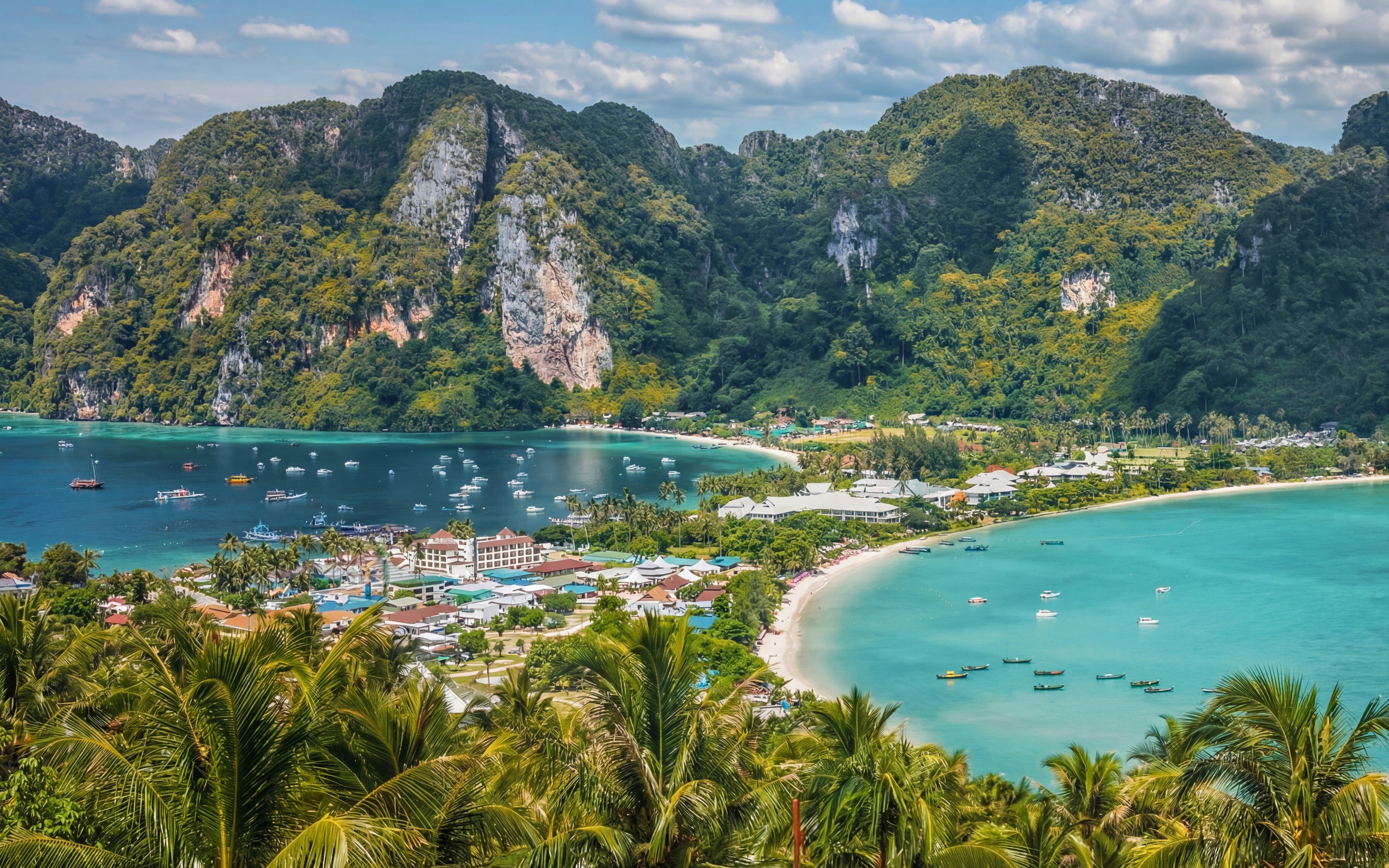
Standing on Ao Nang Beach, you see longtail boats lined up like a wooden necklace along the shore, limestone cliffs rising straight out of the sea, and islands scattered across the horizon as if someone dropped them there without worrying about symmetry. The air feels softer here than Bangkok, the pace looser than Phuket. Krabi doesn’t rush to impress you — it just exists, confidently, and lets you decide how close you want to step into its rhythm.
Most people’s Krabi story begins in Ao Nang, and that’s not an accident. It’s the most accessible version of the province: walkable, social, busy enough to feel alive, but still framed by nature at every turn. You can live here without a scooter, eat well on foot, meet people easily, and figure out whether beach-town life actually suits you. For many expats, Ao Nang becomes a soft landing — the place where you orient yourself, build your first routines, and decide what you want more (or less) of.
But Krabi doesn’t stay singular for long.
Spend more time here and the region begins to reveal layers. Drive ten minutes north and the noise drops away almost immediately. Klong Muang and Tubkaek feel like Krabi exhaling — longer beaches, fewer people, and a noticeably slower, more deliberate pace. These are the areas people drift toward once Ao Nang’s traffic and nightly buzz stop feeling exciting and start feeling unnecessary. Evenings here aren’t about chasing atmosphere; they’re about sunsets, quiet dinners, and space.
Head inland and Krabi Town tells a completely different story again. The beach disappears, replaced by riverside parks, local markets, immigration offices, hospitals, and the practical infrastructure of everyday Thai life. It’s cheaper, more local, and far less curated for visitors. For long-term expats — especially retirees, families, and those who value routine over scenery — Krabi Town often becomes the most livable version of Krabi, even if it’s not the one on postcards.
Then there are the edges of the map. Railay and Tonsai sit just offshore, cut off by cliffs and accessible only by boat. They’re extraordinary places — climbers, fire shows, hidden beaches — but most people treat them as lifestyle extensions rather than full-time bases. Ko Lanta, on the other hand, attracts people who want island life with enough infrastructure to stay for months at a time: slower roads, strong expat micro-communities, and days structured around wellness, diving, and simple routines.
Krabi, then, isn’t a single answer to the question “Could I live here?”
It’s more like a multiple-choice list.
✅ If you want walkable convenience and easy social energy, Ao Nang usually comes first.
✅ If you want quiet beaches and space, Klong Muang or Tubkaek start to make sense.
✅ If you want local life, lower costs, and practicality, Krabi Town becomes compelling.
✅ And if you want island rhythm without total isolation, Ko Lanta keeps pulling you back.
In this guide, we’ll move through Krabi the same way most real relocations do — starting where people arrive, then gradually widening out into the neighborhoods and micro-areas that reveal themselves once the postcard fades and daily life begins.
By the end, you shouldn’t just know that Krabi is beautiful.
You should know whether it actually fits the way you live — or the way you want to live next.
Ao Nang — Neighborhood Profile
Overview
Ao Nang is the social and logistical heart of Krabi, and for most expats, it’s the first place you actually live rather than just visit. The beachfront is lined with longtail boats, limestone cliffs dominate the skyline, and the main road runs parallel to the coast, packed with restaurants, cafés, gyms, tour desks, and low-rise apartments. It’s busy, walkable, and active year-round, shaped by a constant flow of travellers coming and going.
What makes Ao Nang work so well for newcomers is how self-contained it is. You can rent an apartment near the main strip, walk to groceries, eat out every night if you want, hit the gym, grab a massage, and end up at live music by the beach — all without ever needing a scooter. In Krabi terms, that’s rare. It’s the closest thing the province has to a compact lifestyle hub, and it removes a lot of friction from the early stages of relocation.
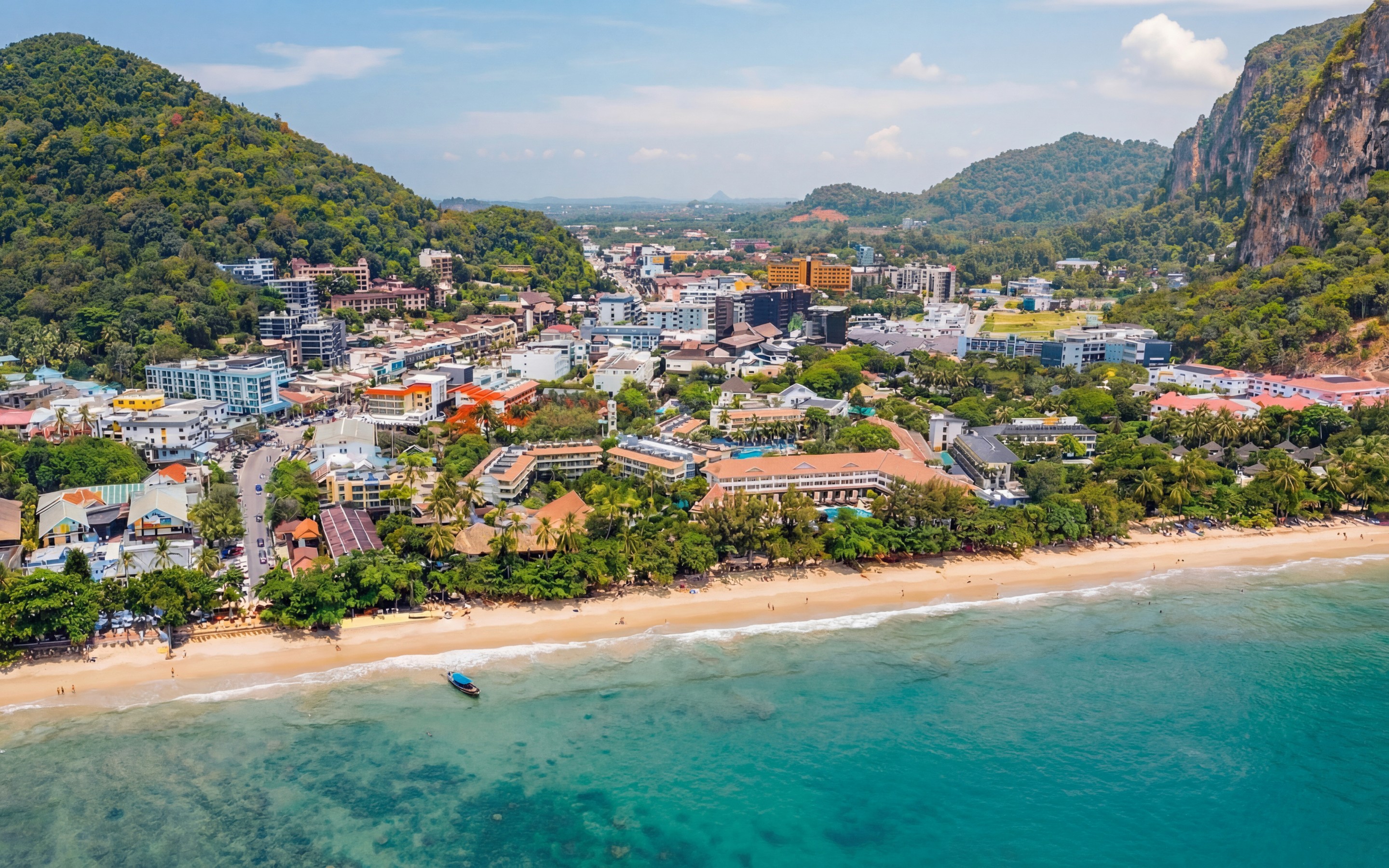
Despite its reputation as “touristy,” daily life here is surprisingly functional. The sidewalks are usable, essentials are close, and routines are easy to establish quickly. Ao Nang isn’t subtle, but it is practical — and that’s exactly why so many expats start here before deciding whether to move quieter or stay put.
Expat POV
From an expat perspective, Ao Nang is one of the easiest places in Thailand to land and live immediately. You don’t need Thai language skills to get by, you don’t need a vehicle to function, and you’re surrounded by other people who are also figuring things out. The air quality is noticeably better than northern cities during burning season, and the blend of beach access and daily convenience makes it feel forgiving in a way many Thai towns aren’t.
That said, Ao Nang comes with clear trade-offs. It’s the most tourist-driven part of Krabi, which shows in pricing, crowds, and energy levels — especially during high season. The main strip can feel chaotic, touts can be persistent, and some expats report being physically steered toward bars at night. Internet reliability can dip during storms, and nightlife crowds skew younger and more transient.
For many long-term residents, Ao Nang is perfect — just not forever. It’s where you find your feet, meet your first friends, and learn Krabi’s rhythms. Over time, some people start craving quieter beaches or more local routines, which is when Klong Muang or Krabi Town begin to look appealing. Ao Nang doesn’t fail people — it graduates them.
Pro Tip
If you plan to live in Ao Nang without a scooter, location matters. Look for accommodation on or just behind the main strip, particularly around Soi 13 near Makro. This area stays quieter than the beachfront while remaining fully walkable to groceries, cafés, gyms, and the beach.
For swimming, most locals avoid Ao Nang Beach itself. Boat traffic makes the water murkier and noisier than nearby options. Nopparat Thara offers lower crowd density, and early-morning boats to Railay let you enjoy clear water before day-trippers arrive.
Property Costs (THB + USD)
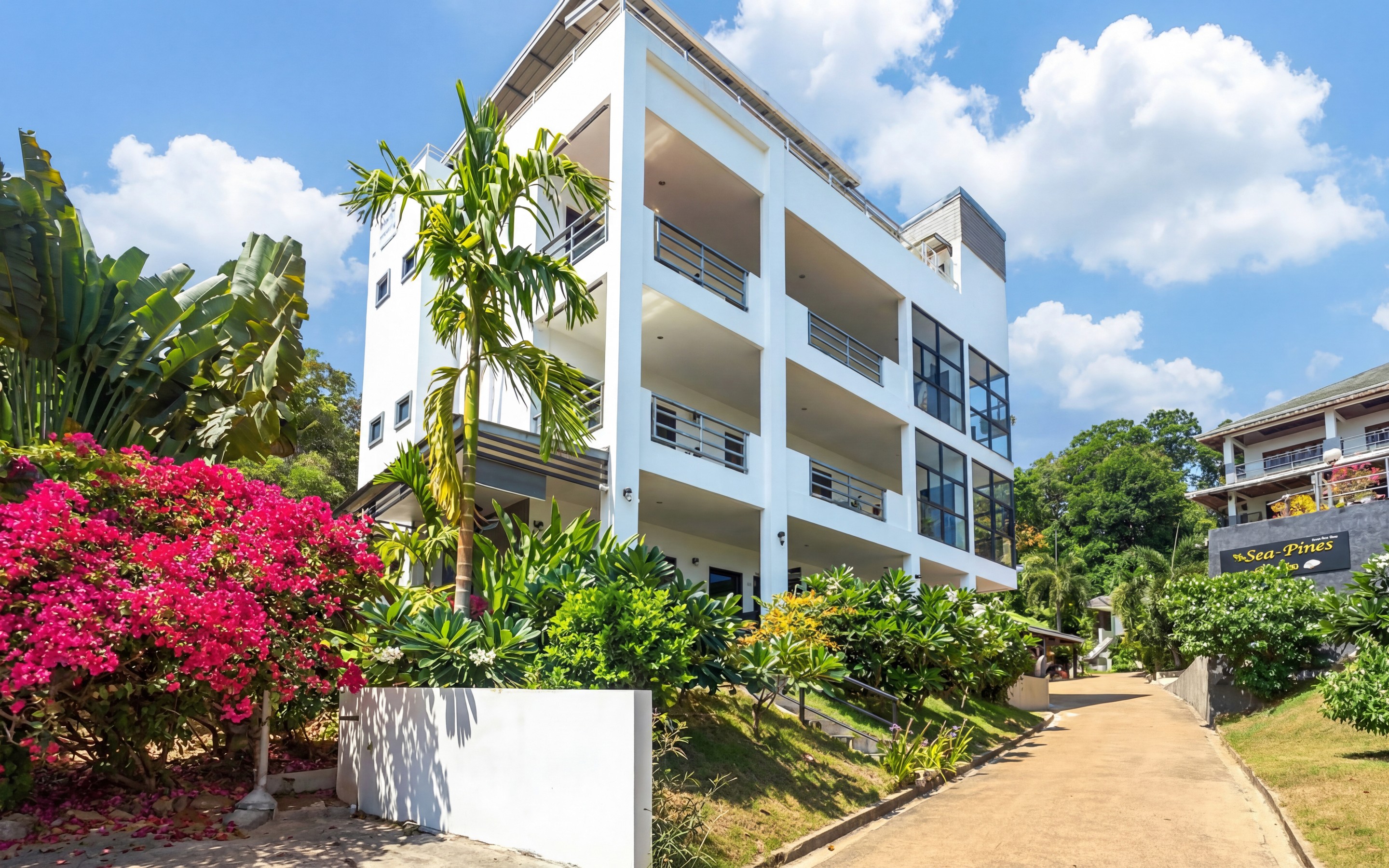
Ao Nang has the widest range of rental options in Krabi, from basic bungalows to modern apartments with partial sea views:
Budget bungalows: 10,000–12,000 THB/month (≈ USD $275–$330) — basic kitchens, compact layouts, usually set slightly inland.
Bungalows behind Makro / Soi 13: 8,000–12,000 THB/month (≈ USD $220–$330) plus utilities.
Mid-range apartments near the main strip: 30,000 THB/month (≈USD $1,000) during shoulder season.
Long-term forest-view houses: as low as 6,000 THB/month (≈ USD $165) on long leases during low season.
Utilities: typically 700–1,000 THB/month for electricity; water ~20–50 THB.
Ao Nang is more expensive than Krabi Town, but significantly cheaper than Phuket or Samui for similar proximity to the beach.
Experience
One evening just before sunset, I watched a young Thai guy set up his fire staff on Ao Nang Beach. Within minutes, couples, backpackers, and a handful of long-term expats drifted toward the sand, forming a loose circle as the sky turned orange. The show wasn’t loud or polished — just a local spinning flames while longtail boats bobbed offshore. For a brief moment, everyone slowed down together. Ao Nang can feel chaotic during the day, but at sunset, it remembers how to breathe.
Klong Muang — Neighborhood Profile
Overview
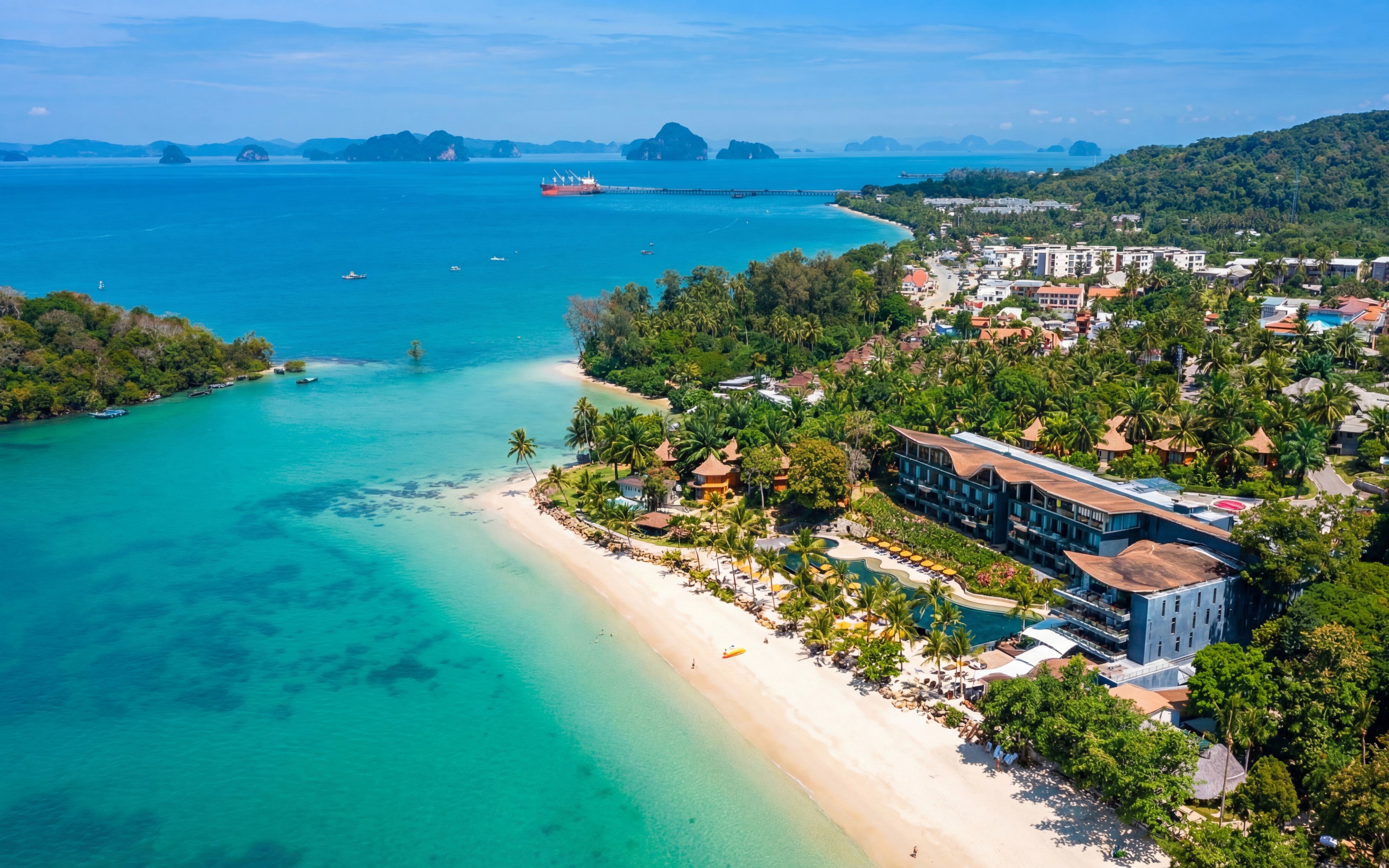
Klong Muang is where Krabi noticeably slows down. Just a short drive north of Ao Nang, the traffic thins, the noise fades, and the coastline opens into long, quiet stretches of sand backed by natural shade. Luxury resorts are spaced discreetly along the beach, but the overall feeling is calm rather than commercial. This part of Krabi feels intentional — less about activity, more about space.
Even during high season, Klong Muang rarely feels crowded. The beach is wide, clean, and often almost empty, with clearer water than Ao Nang and uninterrupted views across to the Hong Islands. Mornings are quiet, afternoons are unhurried, and evenings tend to revolve around sunsets rather than schedules. The energy shift from Ao Nang is immediate and obvious.
For many expats, this is the point in their Krabi journey where the region starts to feel livable long-term. Ao Nang is where you arrive; Klong Muang is where you stay.
Expat POV
Expats who choose Klong Muang are usually trading convenience for quality of life — and they’re comfortable with that decision. The area attracts retirees, couples, and long-term residents who value peace, privacy, and coastline over nightlife and density. The pace is noticeably more grown-up: fewer touts, fewer scooters weaving through traffic, and far less background noise.
That peace comes with practical compromises. A scooter or car is essential for groceries, gyms, immigration visits, and most errands. Dining options exist but are limited compared to Ao Nang, and nightlife is virtually nonexistent. Internet reliability is generally better than Railay but can still fluctuate with weather. Rental inventory is smaller, meaning good places are often found through local connections rather than listings.
Despite this, long-term residents overwhelmingly report that the lifestyle benefits outweigh the trade-offs. If your priorities are calm mornings, quiet beaches, and evenings that don’t feel rushed, Klong Muang delivers consistently.
Pro Tip
Klong Muang Beach changes dramatically with the tide. At low tide, the water recedes far out, exposing wide sand flats that are great for walking but less ideal for swimming. For swimming and photos, aim for mid-to-high tide when the shoreline becomes one of the most beautiful in the province.
For sunset, skip the beachfront resorts and head slightly inland to Dragon View Bar. Perched above the treeline, it offers panoramic views of the Hong Islands and some of the best sunsets in Krabi. Arrive while it’s still light — the road is steep and not ideal for scooters after dark.
Property Costs (THB + USD)
Klong Muang’s rental market is smaller and more upmarket than Ao Nang, with homes set back from the beach or tucked along hillside roads.
Bungalow-style homes: 12,000–20,000 THB/month (≈ USD $330–$550)
Modern villas / pool villas: 35,000–70,000 THB/month (≈ USD $950–$1,900)
Resort long-stay deals: 30,000–60,000 THB/month (≈ USD $800–$1,650) depending on season
Utilities: typically 700–1,200 THB/month for electricity; water costs remain low
You get more space, more privacy, and significantly better beach access than in Ao Nang — but you must rely on your own transport for almost everything.
Experience
One evening in Klong Muang, I watched an older couple — clearly long-term residents by the way the staff greeted them — walk barefoot along the shoreline as the sky turned rose-gold behind the Hong Islands. There was no music, no crowd, no rush. Just the sound of the tide and the quiet confidence of people who had chosen a slower rhythm and let it reshape their days. That’s Klong Muang: it doesn’t ask for attention — it becomes your background.
Krabi Town — Neighborhood Profile
Overview
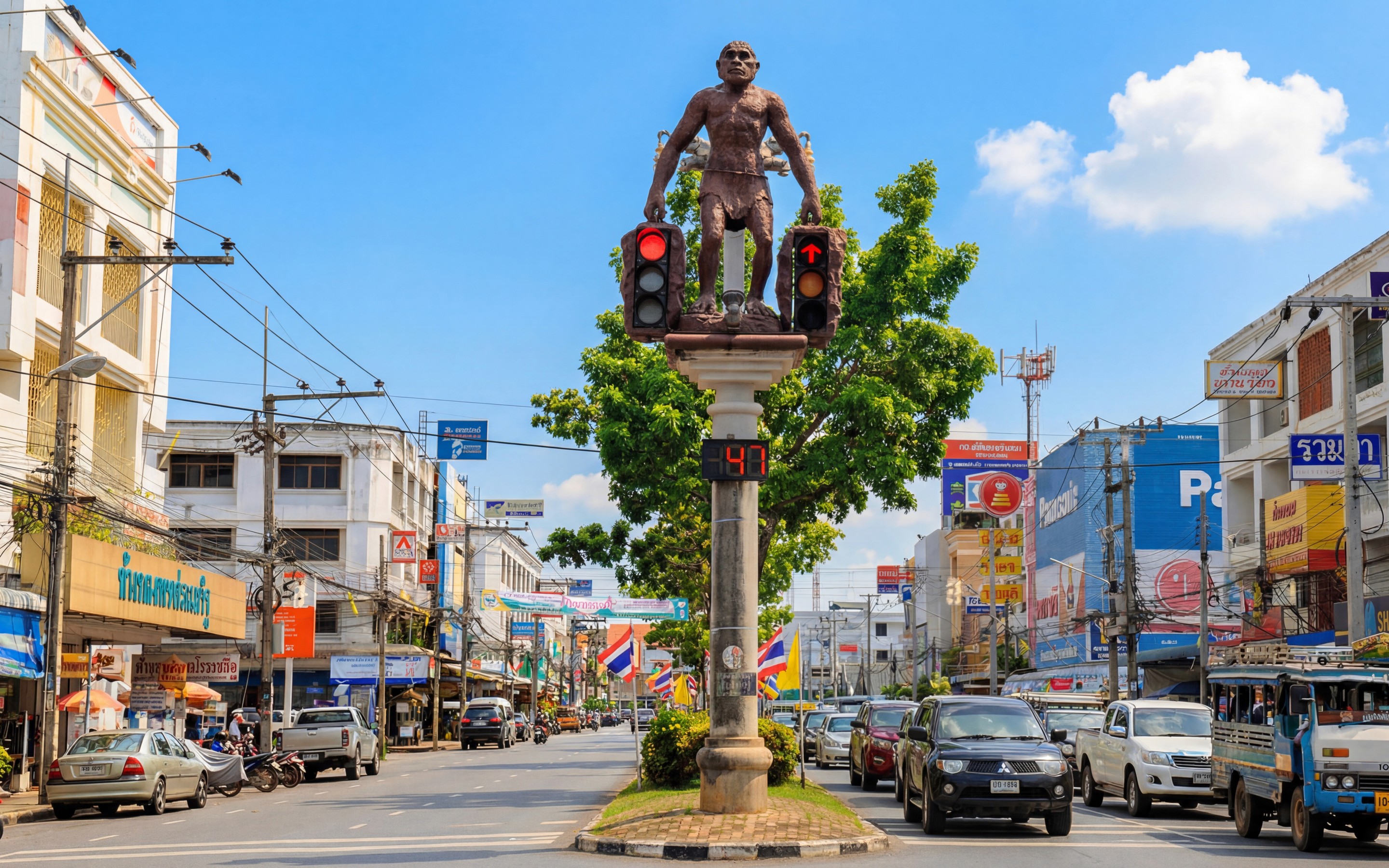
Krabi Town is the administrative and cultural heart of the province — a riverside town where everyday Thai life unfolds away from the beaches. There are no longtail boats on the shoreline and no neon nightlife strips. Instead, you find fresh markets, quiet sois, temples, riverside parks, local cafés, schools, and family-run shops that serve the same customers every day.
This is the side of Krabi most visitors never see. It’s practical, grounded, and built around routine rather than scenery. Mornings revolve around markets and school runs, afternoons around errands and cafés, and evenings around street food and river walks. The pace is slower and more consistent than the coastal areas, and that consistency is exactly what draws long-term expats here.
If Ao Nang is where people arrive in Krabi and Klong Muang or Tubkaek are where they retreat, Krabi Town is where daily life actually works.
Expat POV
Expats choose Krabi Town primarily for cost, convenience, and authenticity. Rent is significantly cheaper than along the coast, food prices drop immediately, and essential services — immigration, banks, hospitals, hardware stores, and full supermarkets — are all close by. Life becomes practical rather than seasonal.
The expat community here is smaller and less visible than in Ao Nang, but it’s also more stable. Teachers, long-term retirees, budget-conscious digital workers, and couples tend to settle here for years rather than months. Many expats integrate more deeply with Thai neighbours, shop owners, and local cafés, simply because they’re sharing the same routines.
The trade-off is obvious: there’s no beach lifestyle, no walkable resort energy, and very little nightlife. But in return, you gain stability, lower costs, and a sense of actually living with Thailand rather than alongside its tourism economy. For many, that trade is more than worth it.
Pro Tip
For the best balance between comfort and local life, look for housing near the riverwalk or behind Vogue Department Store. These areas give you quick access to markets, cafés, and parks without the traffic of the main roads.
For food, Maharat Market is ideal for produce and everyday meals, while Chao Fah Night Market works well for evening snacks and seafood. If you’re running errands, combine them into a single loop — Krabi Town is convenient, but constant back-and-forth trips are inefficient without a vehicle.
Property Costs (THB + USD)
Krabi Town offers some of the best long-term rental value in the entire province.
Basic apartments: 6,000–10,000 THB/month (≈ USD $165–$275)
Modern 1-bedroom units: 10,000–15,000 THB/month (≈ USD $275–$410)
Townhouses (2–3 bedrooms): 12,000–20,000 THB/month (≈ USD $330–$550)
Utilities: generally lower than coastal areas; electricity 600–1,200 THB/month, water minimal
For expats prioritizing affordability and access to essential services, Krabi Town is the most efficient place to live.
Experience
You’ll often find a group of older Thai men playing checkers under a tree, laughing loudly over tiny cups of tea. A foreign retiree may arrive on his bicycle, park it beside the bench, and sit down without ceremony. Within moments, they make space for him at the table. No introductions, no curiosity — just familiarity. That’s Krabi Town: quiet, practical, and easy to become part of if you stay long enough.
Ko Lanta — Neighborhood Profile
Overview
Ko Lanta sits within Krabi Province, but it feels like it operates under a different set of rules. Life here moves slower, quieter, and with far less urgency than on the mainland. Long beaches stretch for kilometres, traffic drifts rather than flows, and days are shaped more by light and tide than by schedules. From the moment you arrive, it’s clear that Lanta isn’t trying to entertain you — it’s inviting you to settle in.
The island naturally divides into three main living zones. Long Beach (Phra Ae) offers the best balance for most expats, with cafés, coworking-friendly spots, beach bars, and reliable swimming. Klong Dao is quieter and more family-oriented, with wide beaches and easier access to schools and services. Lanta Old Town sits along the east coast, made up of wooden stilt houses, boutique cafés, and sea breezes that make it feel like a step back in time.
Ko Lanta isn’t polished, and that’s part of its appeal. The buildings are modest, the roads are simple, and the atmosphere is deeply relaxed. What it offers instead is space, routine, and a sense that life can be lived at a pace that actually feels sustainable.
Expat POV
Expats come to Ko Lanta for lifestyle, not convenience. The island attracts divers, yogis, wellness-focused travellers, creatives, and remote workers who are comfortable trading big-city access for calm and community. Despite its size, Lanta has one of the strongest long-term expat micro-communities in southern Thailand, supported by shared routines rather than formal structures.
KoHub, one of Thailand’s best-known coworking spaces, plays a big role in this. It gives digital nomads a social anchor, making it easier to build connections without relying on nightlife. Internet is workable across most of the island, though speeds and stability vary by area and season.
Living here does require acceptance of limitations. A scooter or car is essential. Healthcare is basic, with serious cases requiring travel to Krabi Town or Phuket. During monsoon season, seas can be rough, ferries may be delayed, and some beaches become unswimmable. People who thrive on constant stimulation often find Lanta too quiet. But for those aligned with its rhythm, it’s easy to stay far longer than planned.
Pro Tip
If you’re considering Ko Lanta, stay in at least two areas before committing. Long Beach suits singles, couples, and remote workers who want social energy and coworking access. Klong Dao is calmer and better for families or long-term stays. Lanta Old Town offers the strongest sense of character and local life.
During the rainy season (May–October), ferries can be unreliable. If you need guaranteed mobility, plan to travel via the land bridge rather than relying solely on boats. For cafés and bakeries, explore Old Town — many of the island’s best spots are tucked along the wooden pier homes.
Property Costs (THB + USD)
Ko Lanta remains one of the best value long-term living options in the region, particularly outside peak season.
Beach-adjacent bungalows: 8,000–15,000 THB/month (≈ USD $220–$410)
Modern apartments / villas: 20,000–35,000 THB/month (≈ USD $550–$1,000)
Family houses (3-bedroom): 18,000–30,000 THB/month (≈ USD $500–$830)
Utilities: moderate; electricity rises with AC usage, water inexpensive
In terms of quality-of-life per baht, Ko Lanta consistently ranks as one of the strongest options in southern Thailand.
Experience
Late one afternoon in Lanta Old Town, I watched a woman sitting on a café balcony overlooking the water, a notebook open beside a plate of warm mango crumble. As the tide came in and lifted the boats beneath the stilt houses, she paused her writing to wave at a shop owner walking past. They exchanged a few words in a mix of English and simple Thai — casual, familiar, unforced. That moment captured Lanta perfectly: slow routines, gentle connections, and a feeling of belonging that grows without announcement.
Railay — Neighborhood Profile
Overview
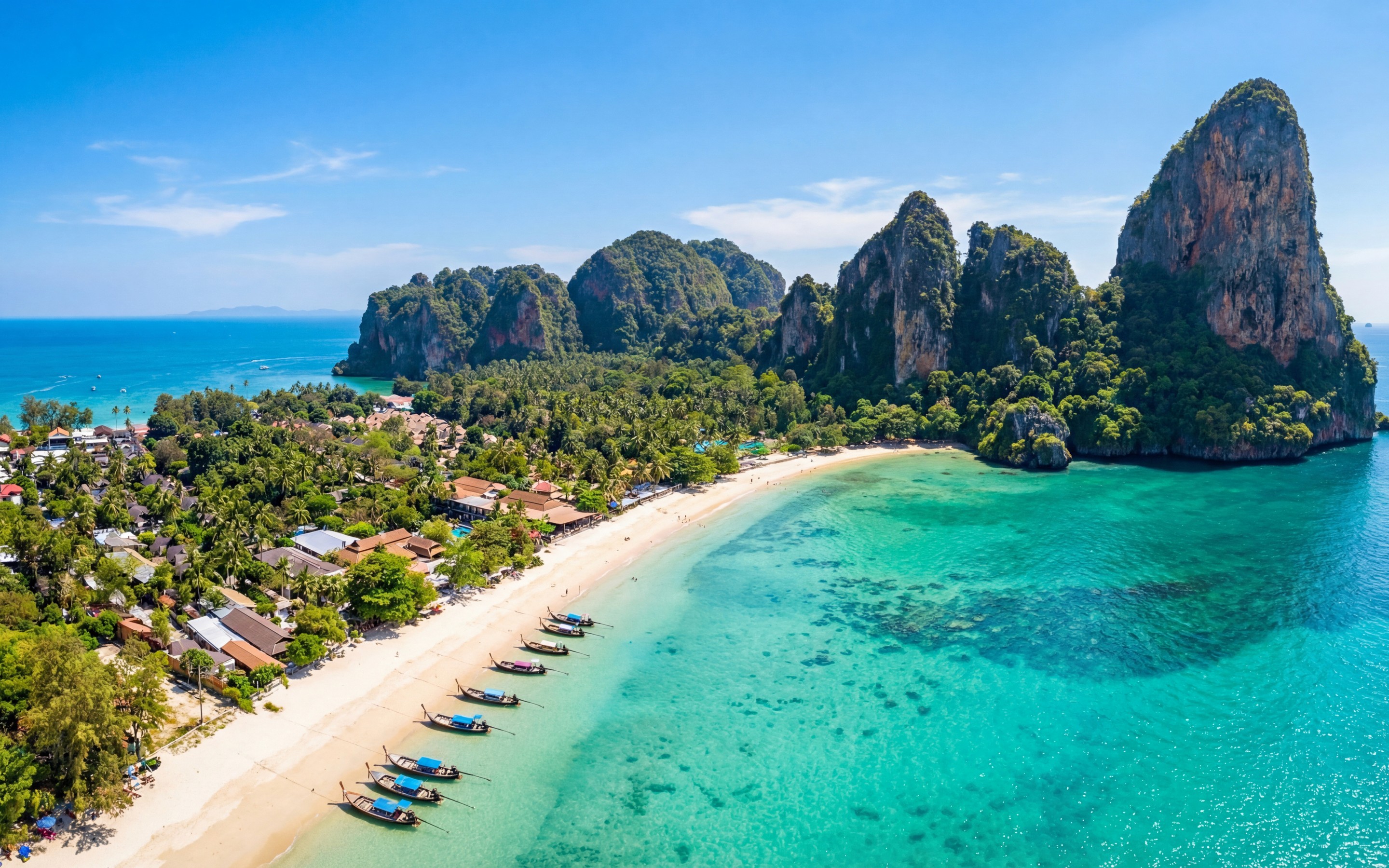
Railay feels like a place that exists slightly outside of normal life. Even before the longtail boat reaches the shore, the limestone cliffs rise straight out of the sea, closing Railay off from the mainland in a way that feels deliberate. There are no roads in or out, no motorbikes, and no traffic noise — just boats, sand paths, and cliffs that dominate your field of vision from every angle. Technically it’s part of the mainland, but in practice, it behaves like a small island carved out for a very specific kind of living.
The area breaks into three distinct zones. Railay West holds the iconic golden beach and sunset views. Railay East, backed by mangroves and boardwalks, is more functional and budget-friendly. Phra Nang sits further around the headland, delivering some of the most photogenic beach scenery in Thailand, wrapped beneath a limestone cave. Each zone feels different, but all share the same sense of separation from the outside world.
Railay is undeniably beautiful — but it’s also limited. Everything arrives by boat. Supplies, groceries, building materials, and people all move on the same tide-dependent schedule. That isolation is exactly what gives Railay its magic, but it’s also what makes long-term living here impractical for most expats.
Expat POV
From an expat perspective, Railay works best as a lifestyle extension rather than a full-time base. The scenery is extraordinary — cliffs like natural cathedrals, hidden lagoons, and beaches that genuinely look better in real life than in photos. But daily life requires compromise. There are no supermarkets, limited housing options, higher prices for essentials, and internet reliability that can fluctuate with weather and sea conditions.
Most expats who live in Krabi treat Railay as a regular reset rather than a residence. Early-morning boat rides for swimming at Phra Nang, climbing sessions, or a quiet sunset beer are common rituals. Socially, Railay leans toward backpackers, climbers, and short-term travellers. It’s easy to meet people for a night or a weekend, but harder to build long-term community.
Expats consistently describe Railay as stunning but unsustainable for everyday life. It offers intensity and beauty in concentrated doses — and that’s exactly how most people prefer to experience it.
Pro Tip
If you want to see Railay at its best, arrive early. Before 9:00am, Railay West is quiet, the boats are minimal, and the beach still feels expansive. Phra Nang Beach offers the clearest swimming because longtail boats aren’t allowed to land on the sand.
For the hidden lagoon hike, only attempt it at low tide and with proper footwear. The trail is steep, muddy, and far more dangerous than it looks online. And if you’re heading over in the evening, always check the last boat times and weather conditions — fares increase after 7pm, and rough seas can delay or cancel service entirely.
Property Costs (THB + USD)
Long-term housing in Railay is extremely limited and largely resort-based. When longer stays are available, prices reflect the logistics of boat-only access.
Budget bungalows (negotiable long-stay): 15,000–25,000 THB/month (≈ USD $400–$675)
Mid-range resort rooms: 45,000–70,000 THB/month (≈ USD $1,200–$1,900)
Food & essentials: higher than Ao Nang due to transport costs
Groceries: very limited; most long-stayers bring supplies from Ao Nang
Railay is the most expensive place in Krabi relative to convenience.
Experience
On one of my visits to Railay, I watched a climber chalk up beneath an overhang near Phra Nang Cave. No tour group, no audience — just the sound of the tide and the soft click of rope clips against stone. Behind him, the beach was empty. In front of him, the cliff opened upward like a cathedral. Moments like that explain Railay perfectly: it strips life down to something pure and beautiful — but also reminds you why most people eventually return to the mainland.
Lifestyle & Everyday Living
Living in Krabi changes your relationship with time more than anything else.
Days start earlier, not because you have to, but because the environment makes it easy. The air is cooler in the mornings, the light is softer, and the coastline invites movement before the heat sets in. Beach walks, quiet scooter rides, or coffee with a view quickly replace rushed mornings and crowded commutes. Over time, this rhythm stops feeling like a holiday habit and starts feeling normal.
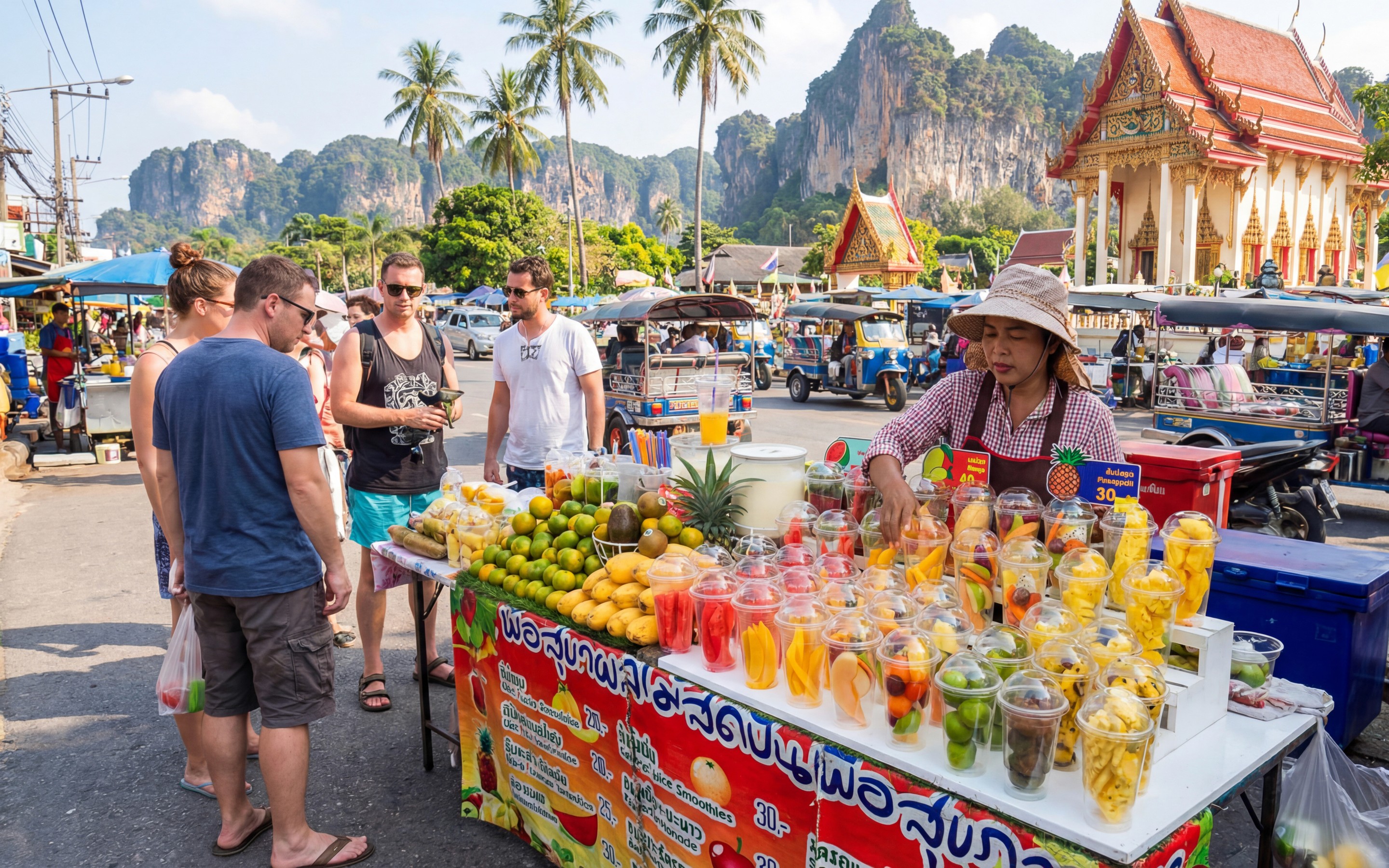
Food becomes simpler and more intuitive. Fresh fruit stalls appear daily, local markets supply most of what you need, and eating out rarely feels like a decision you have to plan. Thai meals are inexpensive and consistent, while Western comfort food is easy to find when you want it. Grocery routines settle quickly around Makro and Lotus’s, and most long-term expats adapt toward local staples without really trying. The result is lower food stress and fewer impulse decisions.
Wellness isn’t something you schedule in Krabi — it’s built into daily life. Swimming, walking, stretching, yoga, and light training happen naturally because the environment supports it. Gyms exist, but many people find themselves moving more without formal workouts. Massage becomes maintenance rather than indulgence, and the consistent air quality makes outdoor routines sustainable year-round, especially compared to northern Thailand’s burning season.
Social life forms through routine rather than events. Instead of organized meetups or packed calendars, connections happen through repetition: the same café in the morning, the same gym time, the same sunset spot, the same evening walk. Conversations build gradually. Relationships feel quieter, but often more genuine. Krabi doesn’t push you into social interaction — it allows it to grow if you show up consistently.
Evenings tend to wind down rather than ramp up. Live music exists, beach bars stay active, and social nights are easy to find — but Krabi rarely feels like it’s pulling you out the door. Many expats describe evenings here as optional instead of obligatory. Some nights are social, others are quiet, and neither feels like you’re missing out.
What surprises most newcomers is how quickly life becomes frictionless. Errands are manageable, routines are repeatable, and days feel full without feeling busy. Krabi doesn’t offer intensity — it offers ease. And for people coming from faster, louder places, that ease becomes the real luxury.
Nightlife (Social Bars & After-Dark Reality)
Nightlife in Krabi is easy to misunderstand if you arrive with big-city expectations. This isn’t a place built around clubbing or spectacle. It’s built around repeat visits, familiar faces, and nights that start casually and decide for themselves how far they go.
Most long-term expats don’t “go out” here — they drift out, see who’s around, and let the night unfold. The venues that matter are the ones that support that rhythm.
Where Social Nights Actually Begin
Sands Beach Club (Ao Nang)
When you don’t want to commit to “going out” yet, Sands is where the night often starts. It sits right on Ao Nang Beach inside the Centara resort, but it’s open to everyone and doesn’t feel locked behind hotel energy. You walk in from the sand, grab a seat facing the bay, and let sunset set the tone.
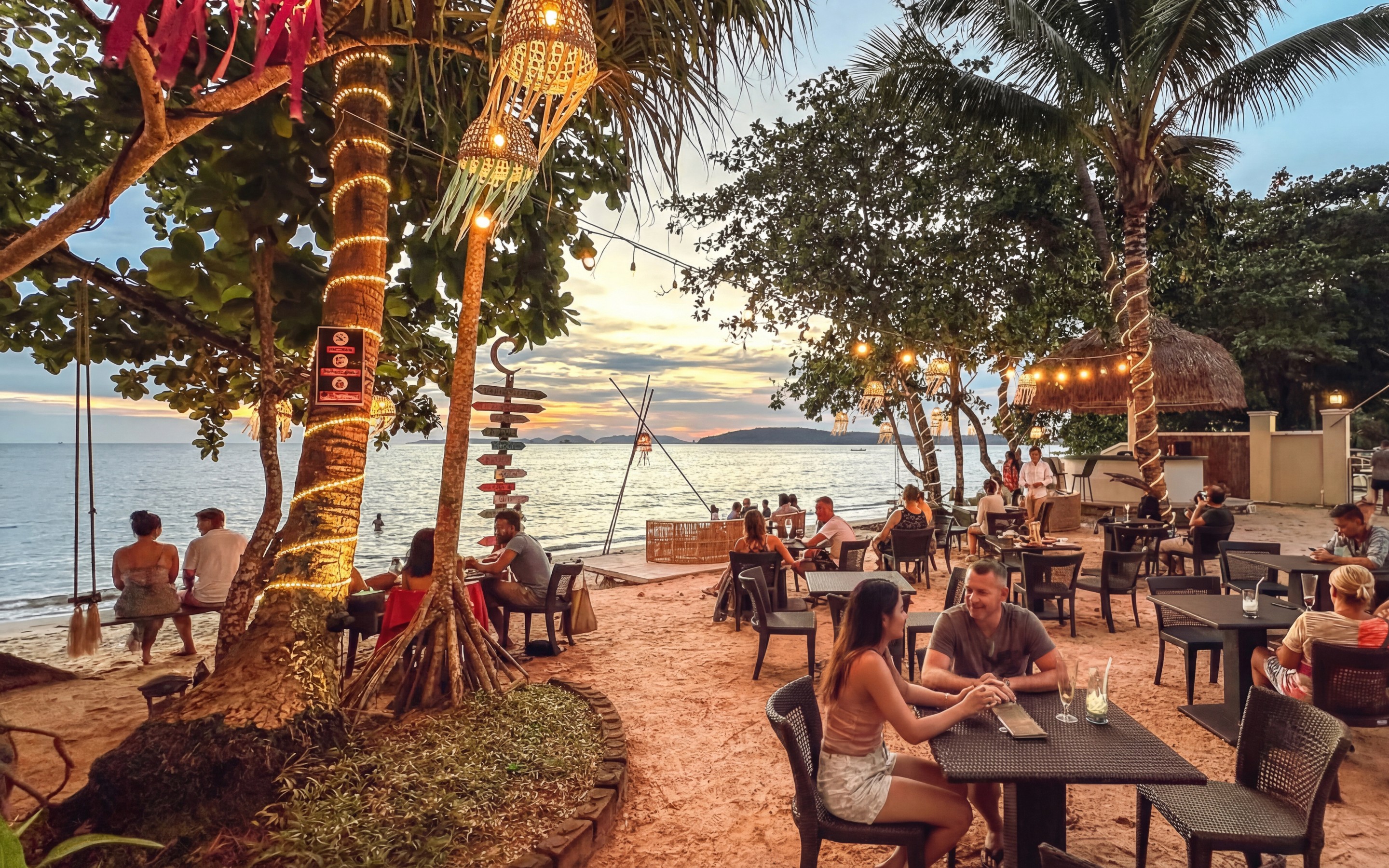
This is a drinks-first place, not a destination you overthink. Expats use it as a soft opener — a couple of beers or cocktails during happy hour, watching the longtail boats come back in as the light drops. The atmosphere is relaxed, social without being pushy, and easy to talk in. Some nights there’s live music or a bit of background performance energy, but it never dominates the space.
The key is what happens after. Sands works because it doesn’t trap you. You either drift into a longer evening if the mood’s there, or you move on — into town, to a livelier bar, or home early without feeling like you missed something. It’s the kind of place where plans form naturally instead of being decided in advance.
When the Night Needs Momentum
Kiss Bar (Ao Nang)
Kiss Bar is where evenings gain energy without tipping into chaos. The music is loud enough to feel alive, but not so aggressive that it kills conversation. The two-level layout matters more than it looks — downstairs pulls people onto the dance floor, upstairs lets them step back without leaving the scene.
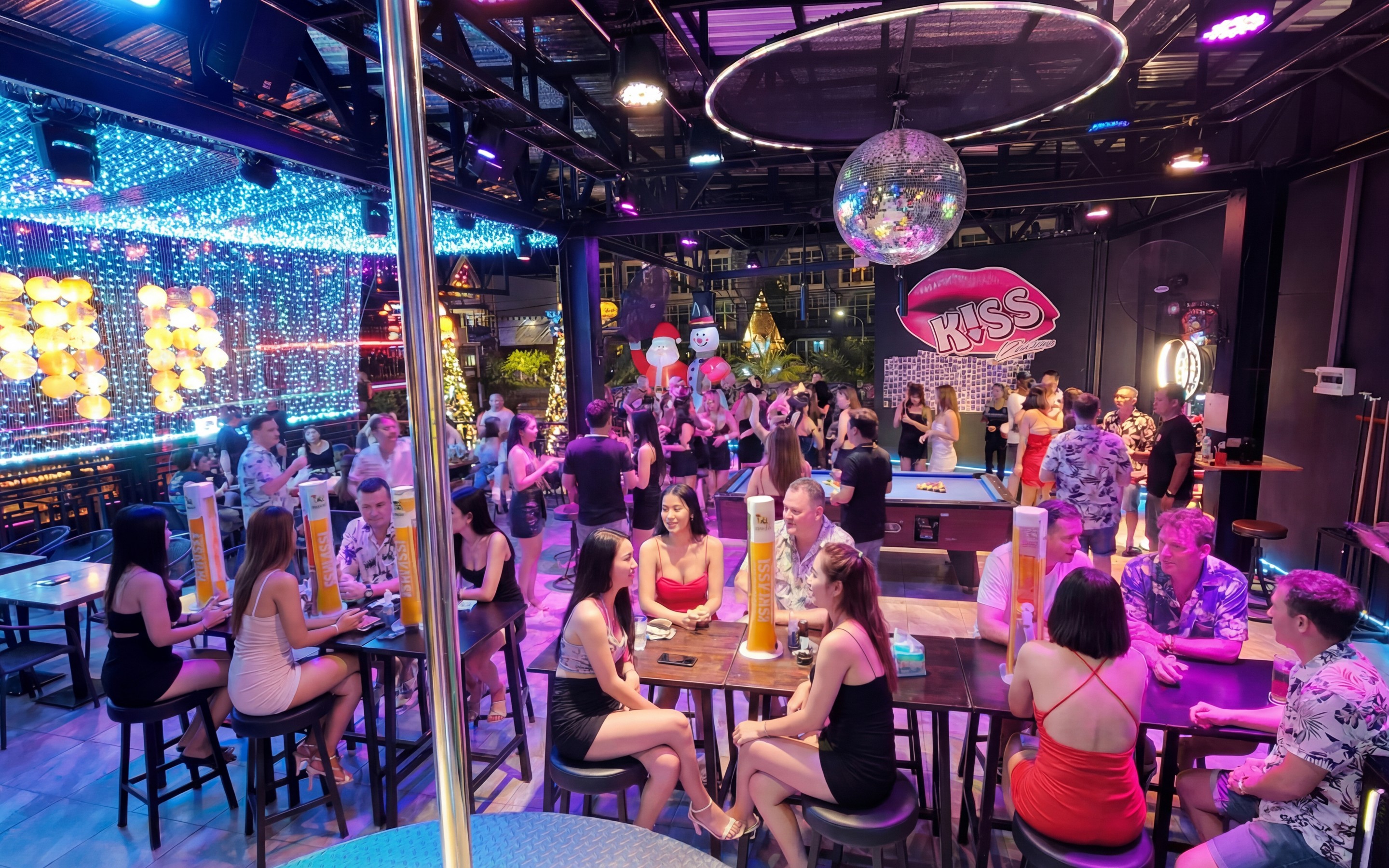
This is one of the few places in Ao Nang where Thai locals, expats, and long-stay travellers mix naturally rather than clustering separately. People aren’t being funnelled or managed; they’re here because they want to be.
Late evening is when Kiss really works. Around 10:30–11pm, the crowd settles into a social flow — conversations start between groups, plans shift, and people decide whether the night stays put or moves on. It’s rarely the final destination, but it’s often the engine that drives the rest of the night.
Live Music & Beach Energy
Ao Nang’s beachfront bars and live music spots form a softer layer of nightlife. This is where evenings start for many people — not because the venues are exceptional, but because they’re comfortable.
Music drifts across the sand, drinks are uncomplicated, and there’s no expectation beyond being present. These places rarely create deep connections on their own, but they set the tone: relaxed, open, and unforced. For couples and early evenings, this is often enough.
The Red-Light Strip — Context Matters
Ao Nang’s red-light area, Soi RCA, exists — and it’s deliberately contained.
It’s small, easy to miss during the day, and becomes active only after dark. Roughly a dozen compact bars line the street, and the entire strip can be walked end-to-end in a couple of minutes. Attention is part of the format, but it’s generally friendly rather than aggressive.
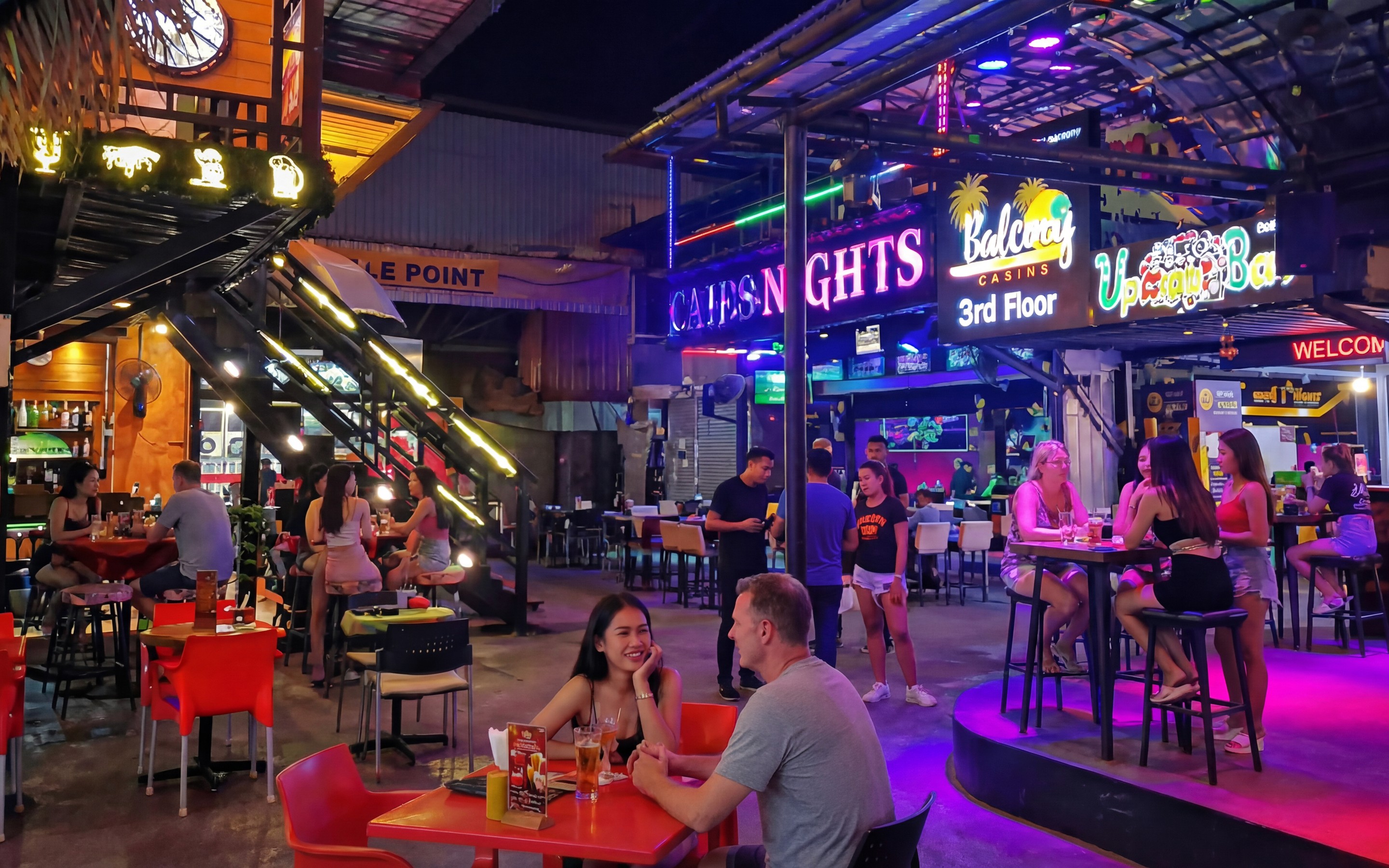
What matters is what it isn’t.
This isn’t Patong.
This isn’t Pattaya.
There’s no spillover, no dominance, and no sense that it defines the town.
Krabi’s local culture keeps this scene controlled and peripheral. Most expats pass through once or twice out of curiosity and then fold it into their mental map without it ever shaping their routine. It exists as an option, not a gravitational force.
And that’s the balance Krabi gets right.
Families still walk the beachfront at night. Couples still linger over drinks. Live music still hums in the background. The red-light area stays where it is — present, contained, and largely invisible unless you go looking for it.
The Real Nightlife Pattern
For most expats, nightlife in Krabi follows a simple arc:
Start somewhere comfortable
See who’s around
Let conversation decide the rest
Some nights end early. Some nights stretch longer than planned. But very few feel wasted or forced.
Krabi doesn’t offer nightlife as an escape.
It offers it as an extension of daily life — familiar, optional, and human.
Getting Around
Getting around Krabi is simple once you understand one key thing: mobility here is personal, not systemic. There’s no metro, no reliable public transit grid, and no expectation that the city will move you efficiently unless you take control of it yourself. For most expats, that adjustment happens quickly — and once it does, transport stops being a frustration and becomes part of the lifestyle.
The default mode of transport for long-term residents is the scooter. Distances are short, roads are generally in good condition, and traffic is light compared to major Thai cities. A scooter gives you full autonomy: quick errands, coastal rides, early-morning beach trips, and easy access to areas that taxis either overprice or avoid. Monthly rentals are inexpensive, fuel costs are low, and most people find that their world in Krabi opens up dramatically once they’re riding.
For those who don’t want to ride — families, retirees, or anyone prioritizing comfort — cars are the practical alternative. Rentals are widely available, long-term arrangements are negotiable, and driving is straightforward once you’re familiar with the roads. Cars also become essential during the rainy season, when sudden downpours make scooter riding uncomfortable or unsafe, especially at night or on forested coastal roads.
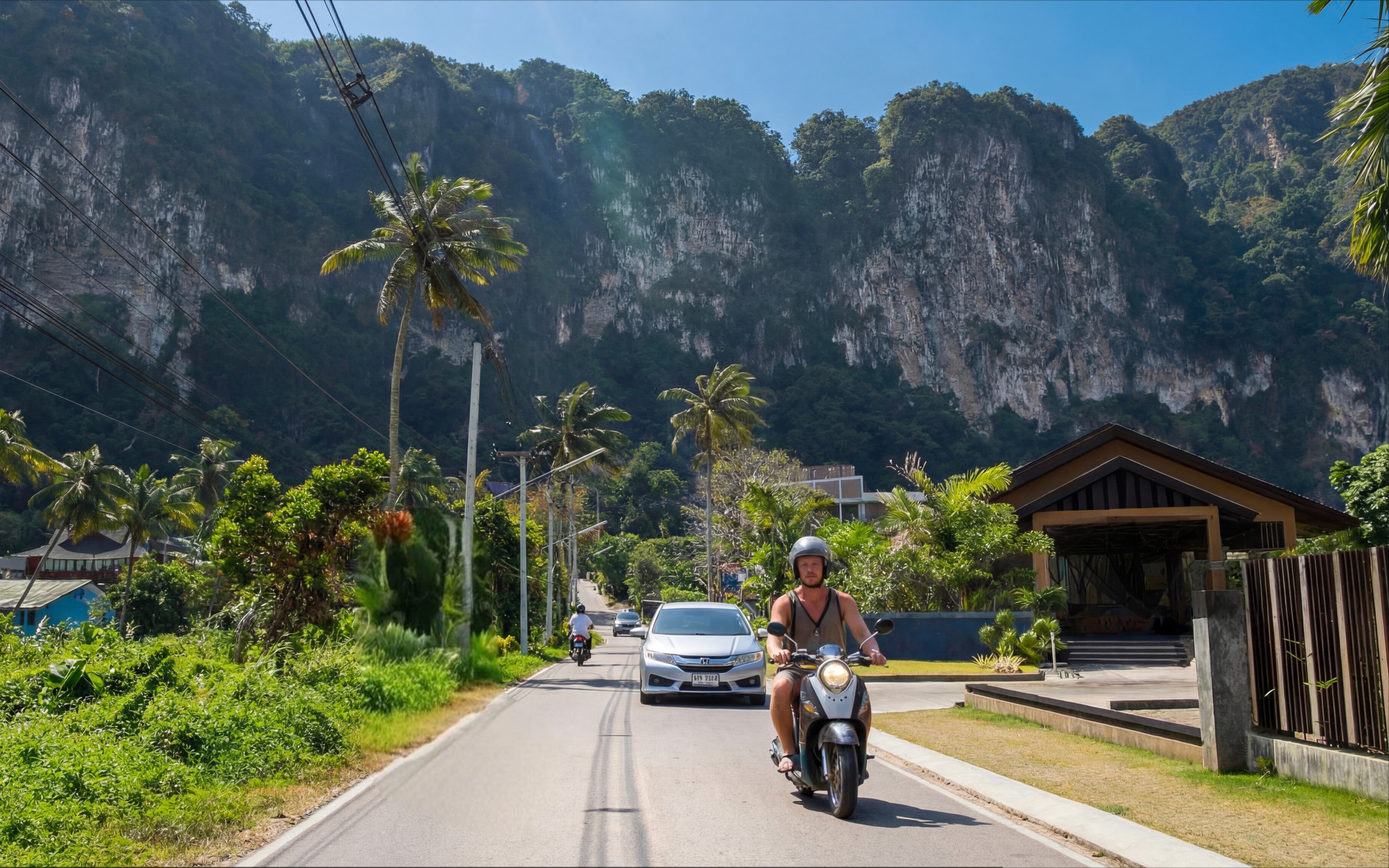
What surprises many newcomers is the taxi situation. Krabi operates under a strong local taxi cartel, particularly around tourist areas. Short trips can cost several times what you’d expect in Chiang Mai or Bangkok. Grab and Bolt exist, but service is inconsistent and drivers often cancel. This pricing pressure is one of the main reasons expats shift quickly toward scooters or cars — relying on taxis long-term is expensive and frustrating.
Boats play a functional role rather than a novelty one. Longtail boats connect the mainland to nearby beaches and islands, with predictable daytime pricing and higher evening rates. Schedules aren’t fixed, and service depends heavily on weather and demand. Expats learn to treat boat travel as flexible rather than guaranteed — especially during monsoon months, when rough seas can delay or cancel crossings altogether.
Within town areas, walking and cycling are viable for short distances, especially where daily needs cluster together. Songthaews do exist, but they aren’t reliable enough to form the backbone of everyday transport. Most residents treat them as occasional conveniences rather than a primary solution.
Weather plays a larger role in mobility here than many people expect. Heavy rain can arrive quickly, roads become slick near limestone cliffs, and visibility drops fast after dark. Many long-term residents avoid nighttime scooter riding on less-lit coastal roads and adjust their routines around daylight and conditions instead of forcing movement.
The real takeaway is this: Krabi rewards self-sufficiency. Once you have your own transport — scooter or car — getting around becomes easy, scenic, and low-stress. Without it, daily life feels unnecessarily constrained. Mobility here isn’t about speed or efficiency; it’s about freedom and rhythm.
Restaurants Worth Returning To
Eating out in Krabi is easy. Eating well on a repeat basis is more selective.
Most restaurants here are built for turnover — broad menus, safe flavours, and food that’s fine once but forgettable twice. What long-term expats gravitate toward are places that feel intentional: tighter menus, consistent execution, and an atmosphere that doesn’t rely on beachfront novelty or tourist foot traffic to work.
These are the places people suggest quietly — not because they’re trendy, but because they hold up.
CRU Kitchen & Bar (Ao Nang)
CRU is where Ao Nang finally feels grown up.
It stands out immediately because it doesn’t try to compete with beach bars or tourist restaurants. The space is clean, modern, and deliberately calm. Lighting is considered. Tables aren’t crammed together. You can actually hear the people you’re with without background chaos creeping in.
The menu is focused rather than bloated, which is always a good sign in Krabi. Dishes are familiar enough to feel comforting, but executed with enough care that you pause mid-bite and register that someone in the kitchen knows what they’re doing. It’s not experimental food — it’s confident food.
What keeps expats coming back is consistency. You don’t gamble here. You know the meal will land, the service will be smooth without hovering, and the evening will feel like a proper night out, not just dinner before something else.
CRU quietly becomes the reference point:
date nights
hosting visiting friends
evenings where you want to feel like you chose well
It’s not loud about what it is — which is exactly why it works.
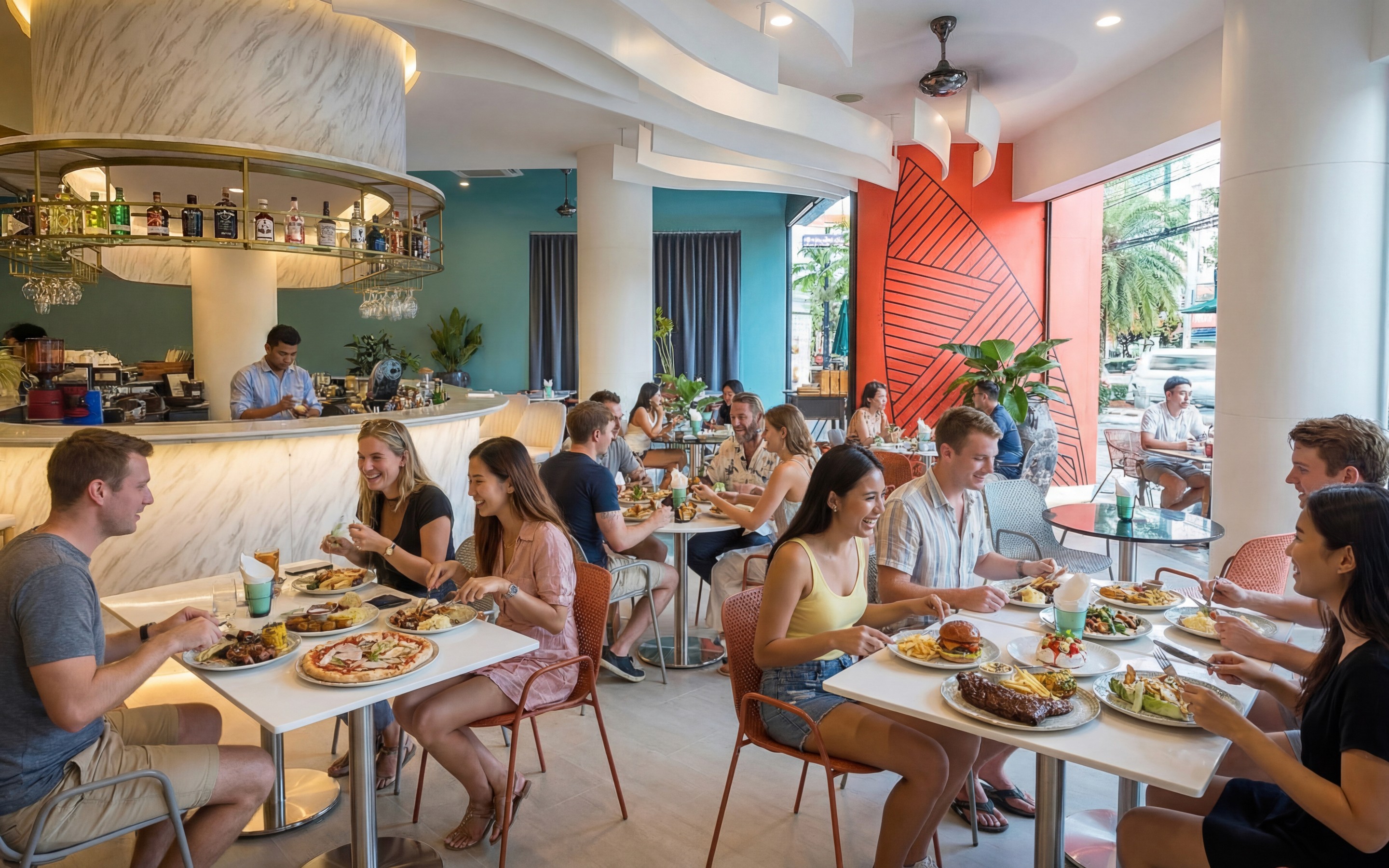
Cru Kitchen’s Role in Daily Life
What’s interesting about CRU isn’t just the food — it’s the crowd. You start recognising the same faces over time: expats who’ve been around long enough to stop experimenting, Thai locals who treat it as a real restaurant rather than a novelty, and travellers who were tipped off by someone who lives here.
That repeat energy matters. It’s the difference between a place you try and a place you trust.
Local Thai Kitchens (The Quiet Staples)
Most long-term expats don’t have a single “favourite Thai restaurant” — they have a rotation.
Small family-run kitchens, open-air places with short menus, and spots that don’t bother translating everything into perfect English tend to deliver the most reliable meals. These are the places you eat at on normal nights, not special ones. The food is fast, affordable, and consistent, and staff start remembering preferences quickly.
They don’t need to be named loudly because they’re everywhere — and once you find two or three near where you live, eating out stops feeling like a decision.
Healthcare & Wellness
Healthcare in Krabi is reliable for everyday needs, but it’s important to understand its limits early so expectations stay realistic. For most expats, the system works well as long as you approach it the way long-term residents do: local care for routine issues, regional care for anything complex.
For general health needs, Krabi is well covered. Private hospitals and clinics handle consultations, blood work, minor injuries, infections, and ongoing medication without difficulty. English is spoken at reception and by many doctors, and costs are low enough that most expats simply pay out of pocket rather than dealing with insurance for basic visits. Appointments are usually quick, and pharmacies are plentiful, well stocked, and staffed by knowledgeable English-speaking pharmacists who often resolve minor issues without a doctor visit.
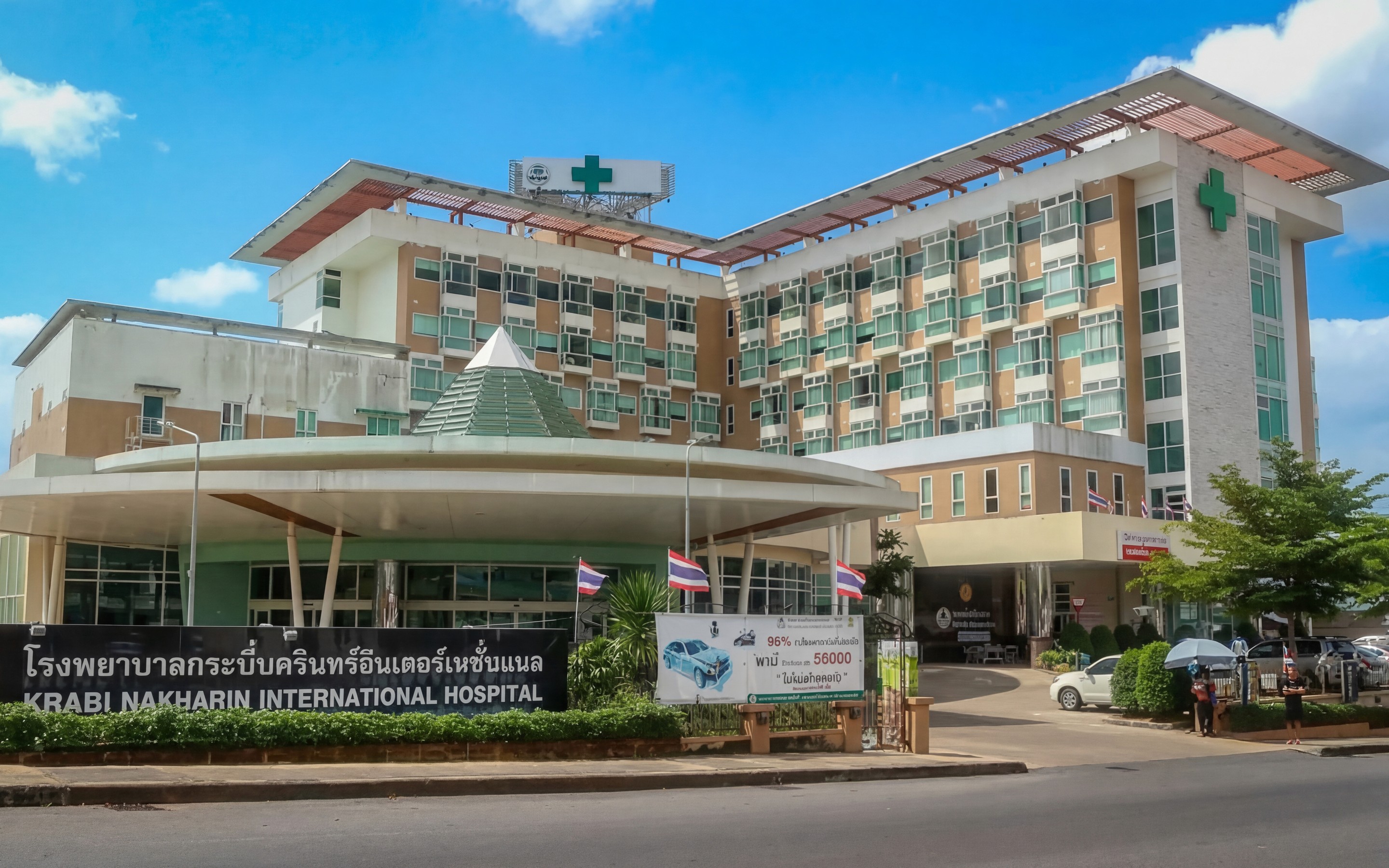
Where Krabi shows its limitations is in specialist and advanced care. Complex diagnostics, specialist surgery, cardiology, oncology, and long-term management of serious conditions generally require travel to Phuket, where international-grade hospitals are available. Most expats factor this in as part of life here — it’s a few hours by car and still significantly cheaper than private healthcare in the West. For retirees or anyone with pre-existing conditions, this is a non-negotiable consideration when deciding whether Krabi is a good long-term fit.
Dental care is a strong point. Clinics are modern, hygienic, and affordable, with routine cleanings, fillings, and cosmetic work easy to arrange locally. Eye care and optometry services are also readily accessible, particularly in town areas. For families, everyday child healthcare is manageable locally, though parents often travel for pediatric specialists when needed.
Wellness, on the other hand, is where Krabi quietly excels.
The environment naturally pushes people toward healthier routines without effort or discipline. Walking becomes part of the day. Swimming is available year-round. Yoga, stretching, and light training fit easily into mornings or evenings. Many expats report that they move more here without consciously trying — not because they’re following a program, but because the setting invites it.
Gyms, massage shops, and spas are easy to access, ranging from simple local setups to higher-end wellness experiences. Massage often shifts from being an occasional indulgence to a form of regular maintenance. The consistently good air quality — especially compared to northern Thailand during burning season — also plays a role, making outdoor activity sustainable throughout the year.
Krabi doesn’t position itself as a medical hub, and it doesn’t need to. What it offers is a comfortable, affordable baseline of care, paired with an environment that supports physical and mental wellbeing in everyday life. For most expats, that balance works well — as long as you’re comfortable knowing that serious medical needs mean getting in the car and heading to Phuket.
Community & Connection
Community in Krabi doesn’t announce itself. There’s no obvious expat district, no constant stream of organized meetups, and no feeling that connection is being manufactured for you. Instead, relationships here tend to form quietly — through shared routines, repeated encounters, and time spent in the same places rather than through structured social scenes.
For many newcomers, this feels different at first. Krabi isn’t a city where you arrive and instantly plug into a large, visible expat network. But what it lacks in density, it makes up for in authenticity. Connections tend to be slower to form, but also less transactional. People get to know each other because they cross paths regularly, not because they’re attending the same weekly meetup.
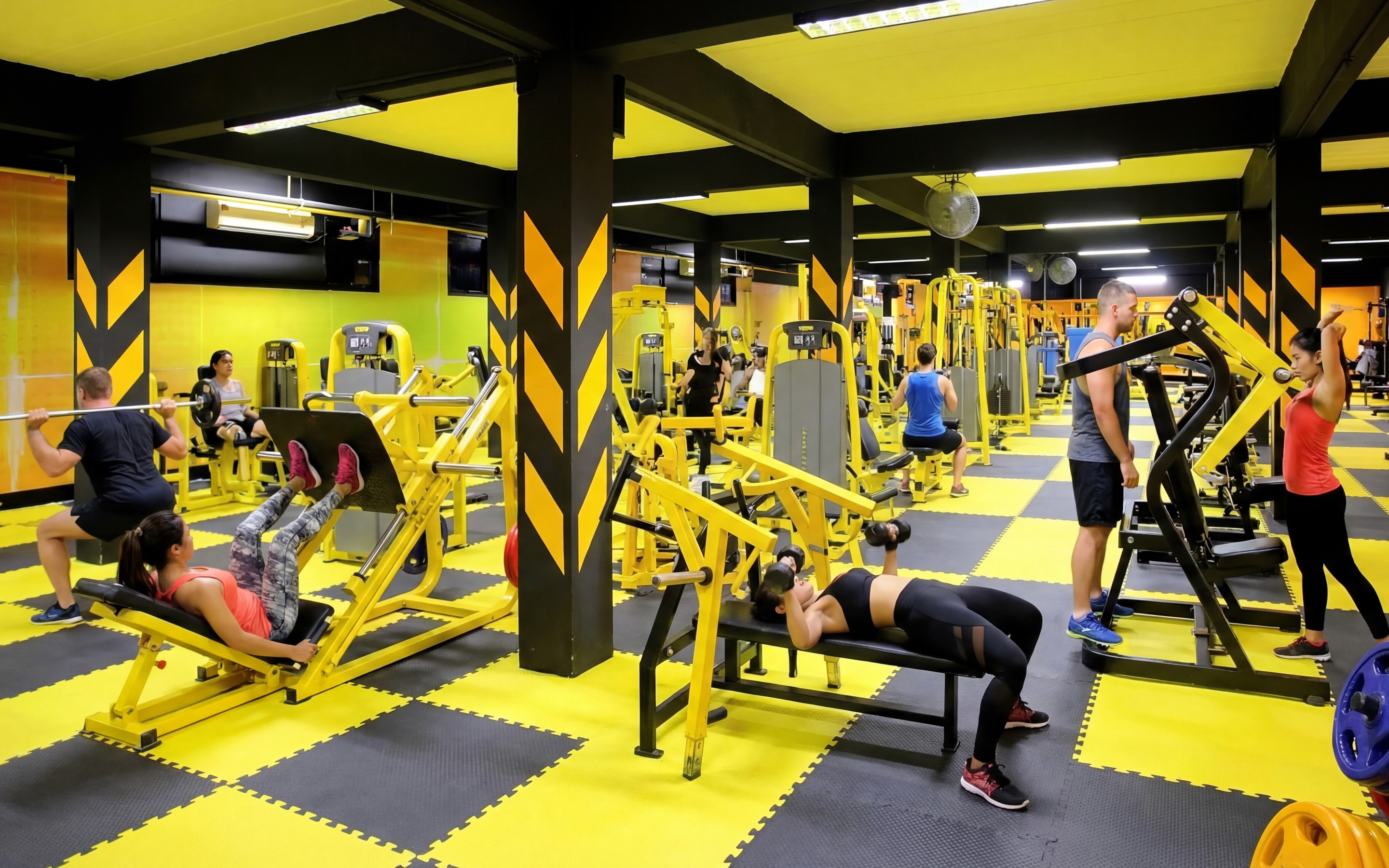
Gyms, cafés, beach walks, and evening bars with live music become the main social glue. Familiar faces start appearing naturally, conversations deepen over time, and relationships develop without pressure. Many long-term expats describe Krabi as a place where friendships feel “earned” — built through consistency rather than convenience.
Another defining feature of Krabi’s social fabric is its transience. A significant portion of the population is passing through — travellers, seasonal workers, short-term digital nomads. This creates an atmosphere that is friendly and open, but also constantly shifting. People are easy to meet, but not everyone stays long enough to build deep roots. For those seeking long-term connection, patience matters.
For expats who want deeper integration, Krabi rewards familiarity. Local shop owners remember faces quickly, staff greet regulars by name, and simple efforts to engage with Thai neighbours go a long way. Over time, it’s common for long-term residents to feel more connected to local routines than to formal expat groups.
What makes community in Krabi work isn’t scale — it’s repetition. Show up to the same places, at the same times, with the same openness, and connection follows naturally. Krabi doesn’t hand you a social life. It gives you the space to build one at your own pace — which, for many people, ends up feeling far more genuine.
Dating & Social Scene
Dating in Krabi reflects the same qualities that shape everyday life here: slower pace, smaller circles, and fewer forced interactions. This isn’t a high-density dating environment like Bangkok or Chiang Mai, and it doesn’t pretend to be. Connections tend to form through lifestyle and routine rather than apps, nightlife, or constant social churn.
What most newcomers notice quickly is that dating here is situational, not abundant. You’re far more likely to meet people through shared activities — gyms, cafés, diving, yoga, coworking spaces, or regular evening hangouts — than through swiping or club-hopping. That naturally filters for compatibility, but it also means patience matters.
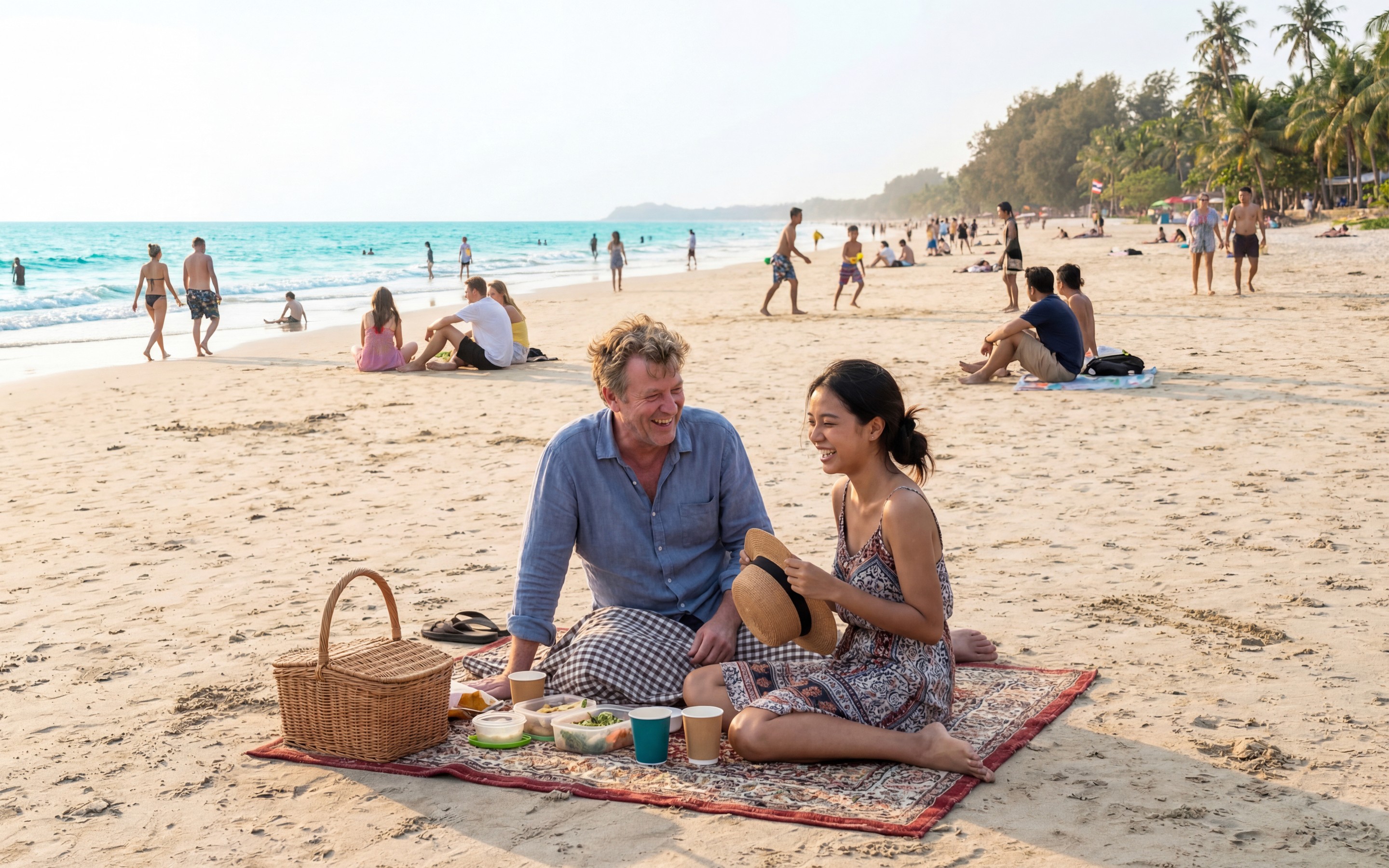
The social energy skews friendly rather than romantic by default. Conversations start easily, people are open, and it’s simple to meet others — especially as a solo expat. But because a large part of the population is transient, many interactions remain short-lived. For some, that feels refreshing and low-pressure. For others, it can feel inconsistent if you’re looking for something stable right away.
Krabi works best for people who are comfortable letting relationships unfold organically. Couples often find that the environment deepens connection rather than distracting from it. Singles who enjoy slower, in-person interactions tend to do better than those relying heavily on apps or nightlife to meet people.
Cross-cultural relationships are common and generally feel natural here, particularly for expats who settle into regular routines and integrate into local life. Krabi’s social tone is respectful and understated, which carries into dating dynamics as well.
Overall, dating in Krabi isn’t about volume or speed. It suits people who value quality over frequency, consistency over intensity, and connection that grows through shared lifestyle rather than constant stimulation. If you’re looking for fast-paced dating with endless options, Krabi may feel limiting. If you’re open to slower, more grounded connections, it can feel surprisingly aligned.
The Verdict
Krabi is not a place that tries to impress you with speed, scale, or stimulation — and that’s exactly why it works for the right kind of expat.
What it offers is space: physical space through beaches, cliffs, and open roads; and mental space through a slower, more forgiving daily rhythm. Life here feels lighter. Days unfold without pressure, routines form naturally, and nature isn’t something you visit — it’s something that quietly shapes how you live.
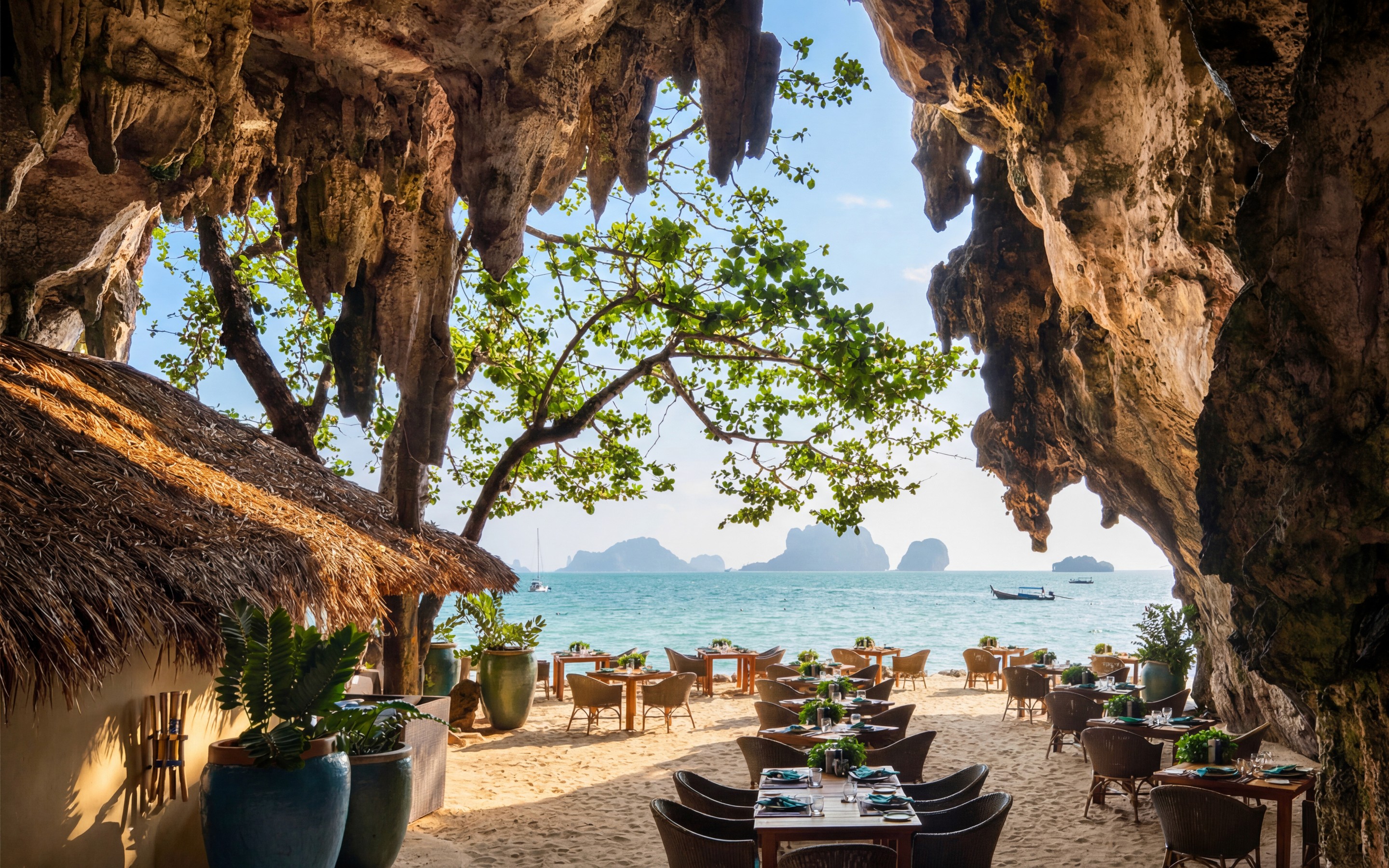
Krabi works especially well if you value calm over convenience. You’re willing to trade malls, nightlife density, and instant services for cleaner air, easier mornings, and evenings that don’t demand anything from you. If you already have location-independent income, retirement funding, or flexible work, Krabi gives you a high quality of life without the financial intensity of Phuket or Bangkok.
The region’s biggest strength is also its biggest filter. Krabi isn’t built for urgency. Transport requires self-sufficiency. Healthcare is solid but not comprehensive. Social circles are smaller and form slowly. If you need constant stimulation, large dating pools, or big-city infrastructure, you’ll feel constrained here fairly quickly.
But if you’re looking for a place where routines become sustainable, where nature supports wellness without effort, and where life feels grounded rather than busy, Krabi stands out as one of Thailand’s most livable coastal regions.
Krabi is a strong fit if you:
Want a slower, nature-first lifestyle with beaches and islands as part of weekly life
Prefer simplicity, routine, and low friction over density and choice overload
Are comfortable driving or riding and managing your own mobility
Value quality of life over nightlife and constant entertainment
Are relocating for lifestyle, not career acceleration
Krabi is not ideal if you:
Need advanced medical care nearby
Rely on public transport or dislike driving
Want a large, fast-moving social or dating scene
Need big-city services, shopping, or professional opportunity
Feel restless in quiet environments
Krabi isn’t trying to be everything — and that’s its advantage. For the people it suits, it doesn’t feel like a compromise at all. It feels like a recalibration.
Final Thoughts
Krabi is one of those places that stays with you — not because it overwhelms, but because it softens everything around you. The cliffs, the water, the quiet roads, the early mornings — they don’t demand attention, they quietly reshape your days.
This isn’t a region built for speed or convenience. It’s built for space, for routine, and for a way of living that feels lighter once you settle into it. For the right person, that shift happens quickly. What starts as a beautiful destination becomes a place where life simply works.
Krabi won’t suit everyone. But if you’re drawn to nature, calm, and a lifestyle that values consistency over intensity, it offers something increasingly rare — a place where everyday life feels good, not just impressive.
Wherever you are in your journey — researching, visiting, or planning a move — I hope this guide has helped you see not just what Krabi looks like, but what living here can genuinely feel like.
See you in the next guide.
— Ben
Krabi: Life, Slower by Design
The first time I arrived in Krabi, it didn’t feel like arriving in a city — it felt like arriving in a collection of possibilities.
Standing on Ao Nang Beach, you see longtail boats lined up like a wooden necklace along the shore, limestone cliffs rising straight out of the sea, and islands scattered across the horizon as if someone dropped them there without worrying about symmetry. The air feels softer here than Bangkok, the pace looser than Phuket. Krabi doesn’t rush to impress you — it just exists, confidently, and lets you decide how close you want to step into its rhythm.
Most people’s Krabi story begins in Ao Nang, and that’s not an accident. It’s the most accessible version of the province: walkable, social, busy enough to feel alive, but still framed by nature at every turn. You can live here without a scooter, eat well on foot, meet people easily, and figure out whether beach-town life actually suits you. For many expats, Ao Nang becomes a soft landing — the place where you orient yourself, build your first routines, and decide what you want more (or less) of.
But Krabi doesn’t stay singular for long.
Spend more time here and the region begins to reveal layers. Drive ten minutes north and the noise drops away almost immediately. Klong Muang and Tubkaek feel like Krabi exhaling — longer beaches, fewer people, and a noticeably slower, more deliberate pace. These are the areas people drift toward once Ao Nang’s traffic and nightly buzz stop feeling exciting and start feeling unnecessary. Evenings here aren’t about chasing atmosphere; they’re about sunsets, quiet dinners, and space.
Head inland and Krabi Town tells a completely different story again. The beach disappears, replaced by riverside parks, local markets, immigration offices, hospitals, and the practical infrastructure of everyday Thai life. It’s cheaper, more local, and far less curated for visitors. For long-term expats — especially retirees, families, and those who value routine over scenery — Krabi Town often becomes the most livable version of Krabi, even if it’s not the one on postcards.
Then there are the edges of the map. Railay and Tonsai sit just offshore, cut off by cliffs and accessible only by boat. They’re extraordinary places — climbers, fire shows, hidden beaches — but most people treat them as lifestyle extensions rather than full-time bases. Ko Lanta, on the other hand, attracts people who want island life with enough infrastructure to stay for months at a time: slower roads, strong expat micro-communities, and days structured around wellness, diving, and simple routines.
Krabi, then, isn’t a single answer to the question “Could I live here?”
It’s more like a multiple-choice list.
✅ If you want walkable convenience and easy social energy, Ao Nang usually comes first.
✅ If you want quiet beaches and space, Klong Muang or Tubkaek start to make sense.
✅ If you want local life, lower costs, and practicality, Krabi Town becomes compelling.
✅ And if you want island rhythm without total isolation, Ko Lanta keeps pulling you back.
In this guide, we’ll move through Krabi the same way most real relocations do — starting where people arrive, then gradually widening out into the neighborhoods and micro-areas that reveal themselves once the postcard fades and daily life begins.
By the end, you shouldn’t just know that Krabi is beautiful.
You should know whether it actually fits the way you live — or the way you want to live next.
Ao Nang — Neighborhood Profile
Overview
Ao Nang is the social and logistical heart of Krabi, and for most expats, it’s the first place you actually live rather than just visit. The beachfront is lined with longtail boats, limestone cliffs dominate the skyline, and the main road runs parallel to the coast, packed with restaurants, cafés, gyms, tour desks, and low-rise apartments. It’s busy, walkable, and active year-round, shaped by a constant flow of travellers coming and going.
What makes Ao Nang work so well for newcomers is how self-contained it is. You can rent an apartment near the main strip, walk to groceries, eat out every night if you want, hit the gym, grab a massage, and end up at live music by the beach — all without ever needing a scooter. In Krabi terms, that’s rare. It’s the closest thing the province has to a compact lifestyle hub, and it removes a lot of friction from the early stages of relocation.
Despite its reputation as “touristy,” daily life here is surprisingly functional. The sidewalks are usable, essentials are close, and routines are easy to establish quickly. Ao Nang isn’t subtle, but it is practical — and that’s exactly why so many expats start here before deciding whether to move quieter or stay put.
Expat POV
From an expat perspective, Ao Nang is one of the easiest places in Thailand to land and live immediately. You don’t need Thai language skills to get by, you don’t need a vehicle to function, and you’re surrounded by other people who are also figuring things out. The air quality is noticeably better than northern cities during burning season, and the blend of beach access and daily convenience makes it feel forgiving in a way many Thai towns aren’t.
That said, Ao Nang comes with clear trade-offs. It’s the most tourist-driven part of Krabi, which shows in pricing, crowds, and energy levels — especially during high season. The main strip can feel chaotic, touts can be persistent, and some expats report being physically steered toward bars at night. Internet reliability can dip during storms, and nightlife crowds skew younger and more transient.
For many long-term residents, Ao Nang is perfect — just not forever. It’s where you find your feet, meet your first friends, and learn Krabi’s rhythms. Over time, some people start craving quieter beaches or more local routines, which is when Klong Muang or Krabi Town begin to look appealing. Ao Nang doesn’t fail people — it graduates them.
Pro Tip
If you plan to live in Ao Nang without a scooter, location matters. Look for accommodation on or just behind the main strip, particularly around Soi 13 near Makro. This area stays quieter than the beachfront while remaining fully walkable to groceries, cafés, gyms, and the beach.
For swimming, most locals avoid Ao Nang Beach itself. Boat traffic makes the water murkier and noisier than nearby options. Nopparat Thara offers lower crowd density, and early-morning boats to Railay let you enjoy clear water before day-trippers arrive.
Property Costs (THB + USD)
Ao Nang has the widest range of rental options in Krabi, from basic bungalows to modern apartments with partial sea views:
Budget bungalows: 10,000–12,000 THB/month (≈ USD $275–$330) — basic kitchens, compact layouts, usually set slightly inland.
Bungalows behind Makro / Soi 13: 8,000–12,000 THB/month (≈ USD $220–$330) plus utilities.
Mid-range apartments near the main strip: 30,000 THB/month (≈USD $1,000) during shoulder season.
Long-term forest-view houses: as low as 6,000 THB/month (≈ USD $165) on long leases during low season.
Utilities: typically 700–1,000 THB/month for electricity; water ~20–50 THB.
Ao Nang is more expensive than Krabi Town, but significantly cheaper than Phuket or Samui for similar proximity to the beach.
Experience
One evening just before sunset, I watched a young Thai guy set up his fire staff on Ao Nang Beach. Within minutes, couples, backpackers, and a handful of long-term expats drifted toward the sand, forming a loose circle as the sky turned orange. The show wasn’t loud or polished — just a local spinning flames while longtail boats bobbed offshore. For a brief moment, everyone slowed down together. Ao Nang can feel chaotic during the day, but at sunset, it remembers how to breathe.
Klong Muang — Neighborhood Profile
Overview
Klong Muang is where Krabi noticeably slows down. Just a short drive north of Ao Nang, the traffic thins, the noise fades, and the coastline opens into long, quiet stretches of sand backed by natural shade. Luxury resorts are spaced discreetly along the beach, but the overall feeling is calm rather than commercial. This part of Krabi feels intentional — less about activity, more about space.
Even during high season, Klong Muang rarely feels crowded. The beach is wide, clean, and often almost empty, with clearer water than Ao Nang and uninterrupted views across to the Hong Islands. Mornings are quiet, afternoons are unhurried, and evenings tend to revolve around sunsets rather than schedules. The energy shift from Ao Nang is immediate and obvious.
For many expats, this is the point in their Krabi journey where the region starts to feel livable long-term. Ao Nang is where you arrive; Klong Muang is where you stay.
Expat POV
Expats who choose Klong Muang are usually trading convenience for quality of life — and they’re comfortable with that decision. The area attracts retirees, couples, and long-term residents who value peace, privacy, and coastline over nightlife and density. The pace is noticeably more grown-up: fewer touts, fewer scooters weaving through traffic, and far less background noise.
That peace comes with practical compromises. A scooter or car is essential for groceries, gyms, immigration visits, and most errands. Dining options exist but are limited compared to Ao Nang, and nightlife is virtually nonexistent. Internet reliability is generally better than Railay but can still fluctuate with weather. Rental inventory is smaller, meaning good places are often found through local connections rather than listings.
Despite this, long-term residents overwhelmingly report that the lifestyle benefits outweigh the trade-offs. If your priorities are calm mornings, quiet beaches, and evenings that don’t feel rushed, Klong Muang delivers consistently.
Pro Tip
Klong Muang Beach changes dramatically with the tide. At low tide, the water recedes far out, exposing wide sand flats that are great for walking but less ideal for swimming. For swimming and photos, aim for mid-to-high tide when the shoreline becomes one of the most beautiful in the province.
For sunset, skip the beachfront resorts and head slightly inland to Dragon View Bar. Perched above the treeline, it offers panoramic views of the Hong Islands and some of the best sunsets in Krabi. Arrive while it’s still light — the road is steep and not ideal for scooters after dark.
Property Costs (THB + USD)
Klong Muang’s rental market is smaller and more upmarket than Ao Nang, with homes set back from the beach or tucked along hillside roads.
Bungalow-style homes: 12,000–20,000 THB/month (≈ USD $330–$550)
Modern villas / pool villas: 35,000–70,000 THB/month (≈ USD $950–$1,900)
Resort long-stay deals: 30,000–60,000 THB/month (≈ USD $800–$1,650) depending on season
Utilities: typically 700–1,200 THB/month for electricity; water costs remain low
You get more space, more privacy, and significantly better beach access than in Ao Nang — but you must rely on your own transport for almost everything.
Experience
One evening in Klong Muang, I watched an older couple — clearly long-term residents by the way the staff greeted them — walk barefoot along the shoreline as the sky turned rose-gold behind the Hong Islands. There was no music, no crowd, no rush. Just the sound of the tide and the quiet confidence of people who had chosen a slower rhythm and let it reshape their days. That’s Klong Muang: it doesn’t ask for attention — it becomes your background.
Krabi Town — Neighborhood Profile
Overview
Krabi Town is the administrative and cultural heart of the province — a riverside town where everyday Thai life unfolds away from the beaches. There are no longtail boats on the shoreline and no neon nightlife strips. Instead, you find fresh markets, quiet sois, temples, riverside parks, local cafés, schools, and family-run shops that serve the same customers every day.
This is the side of Krabi most visitors never see. It’s practical, grounded, and built around routine rather than scenery. Mornings revolve around markets and school runs, afternoons around errands and cafés, and evenings around street food and river walks. The pace is slower and more consistent than the coastal areas, and that consistency is exactly what draws long-term expats here.
If Ao Nang is where people arrive in Krabi and Klong Muang or Tubkaek are where they retreat, Krabi Town is where daily life actually works.
Expat POV
Expats choose Krabi Town primarily for cost, convenience, and authenticity. Rent is significantly cheaper than along the coast, food prices drop immediately, and essential services — immigration, banks, hospitals, hardware stores, and full supermarkets — are all close by. Life becomes practical rather than seasonal.
The expat community here is smaller and less visible than in Ao Nang, but it’s also more stable. Teachers, long-term retirees, budget-conscious digital workers, and couples tend to settle here for years rather than months. Many expats integrate more deeply with Thai neighbours, shop owners, and local cafés, simply because they’re sharing the same routines.
The trade-off is obvious: there’s no beach lifestyle, no walkable resort energy, and very little nightlife. But in return, you gain stability, lower costs, and a sense of actually living with Thailand rather than alongside its tourism economy. For many, that trade is more than worth it.
Pro Tip
For the best balance between comfort and local life, look for housing near the riverwalk or behind Vogue Department Store. These areas give you quick access to markets, cafés, and parks without the traffic of the main roads.
For food, Maharat Market is ideal for produce and everyday meals, while Chao Fah Night Market works well for evening snacks and seafood. If you’re running errands, combine them into a single loop — Krabi Town is convenient, but constant back-and-forth trips are inefficient without a vehicle.
Property Costs (THB + USD)
Krabi Town offers some of the best long-term rental value in the entire province.
Basic apartments: 6,000–10,000 THB/month (≈ USD $165–$275)
Modern 1-bedroom units: 10,000–15,000 THB/month (≈ USD $275–$410)
Townhouses (2–3 bedrooms): 12,000–20,000 THB/month (≈ USD $330–$550)
Utilities: generally lower than coastal areas; electricity 600–1,200 THB/month, water minimal
For expats prioritizing affordability and access to essential services, Krabi Town is the most efficient place to live.
Experience
You’ll often find a group of older Thai men playing checkers under a tree, laughing loudly over tiny cups of tea. A foreign retiree may arrive on his bicycle, park it beside the bench, and sit down without ceremony. Within moments, they make space for him at the table. No introductions, no curiosity — just familiarity. That’s Krabi Town: quiet, practical, and easy to become part of if you stay long enough.
Ko Lanta — Neighborhood Profile
Overview
Ko Lanta sits within Krabi Province, but it feels like it operates under a different set of rules. Life here moves slower, quieter, and with far less urgency than on the mainland. Long beaches stretch for kilometres, traffic drifts rather than flows, and days are shaped more by light and tide than by schedules. From the moment you arrive, it’s clear that Lanta isn’t trying to entertain you — it’s inviting you to settle in.
The island naturally divides into three main living zones. Long Beach (Phra Ae) offers the best balance for most expats, with cafés, coworking-friendly spots, beach bars, and reliable swimming. Klong Dao is quieter and more family-oriented, with wide beaches and easier access to schools and services. Lanta Old Town sits along the east coast, made up of wooden stilt houses, boutique cafés, and sea breezes that make it feel like a step back in time.
Ko Lanta isn’t polished, and that’s part of its appeal. The buildings are modest, the roads are simple, and the atmosphere is deeply relaxed. What it offers instead is space, routine, and a sense that life can be lived at a pace that actually feels sustainable.
Expat POV
Expats come to Ko Lanta for lifestyle, not convenience. The island attracts divers, yogis, wellness-focused travellers, creatives, and remote workers who are comfortable trading big-city access for calm and community. Despite its size, Lanta has one of the strongest long-term expat micro-communities in southern Thailand, supported by shared routines rather than formal structures.
KoHub, one of Thailand’s best-known coworking spaces, plays a big role in this. It gives digital nomads a social anchor, making it easier to build connections without relying on nightlife. Internet is workable across most of the island, though speeds and stability vary by area and season.
Living here does require acceptance of limitations. A scooter or car is essential. Healthcare is basic, with serious cases requiring travel to Krabi Town or Phuket. During monsoon season, seas can be rough, ferries may be delayed, and some beaches become unswimmable. People who thrive on constant stimulation often find Lanta too quiet. But for those aligned with its rhythm, it’s easy to stay far longer than planned.
Pro Tip
If you’re considering Ko Lanta, stay in at least two areas before committing. Long Beach suits singles, couples, and remote workers who want social energy and coworking access. Klong Dao is calmer and better for families or long-term stays. Lanta Old Town offers the strongest sense of character and local life.
During the rainy season (May–October), ferries can be unreliable. If you need guaranteed mobility, plan to travel via the land bridge rather than relying solely on boats. For cafés and bakeries, explore Old Town — many of the island’s best spots are tucked along the wooden pier homes.
Property Costs (THB + USD)
Ko Lanta remains one of the best value long-term living options in the region, particularly outside peak season.
Beach-adjacent bungalows: 8,000–15,000 THB/month (≈ USD $220–$410)
Modern apartments / villas: 20,000–35,000 THB/month (≈ USD $550–$1,000)
Family houses (3-bedroom): 18,000–30,000 THB/month (≈ USD $500–$830)
Utilities: moderate; electricity rises with AC usage, water inexpensive
In terms of quality-of-life per baht, Ko Lanta consistently ranks as one of the strongest options in southern Thailand.
Experience
Late one afternoon in Lanta Old Town, I watched a woman sitting on a café balcony overlooking the water, a notebook open beside a plate of warm mango crumble. As the tide came in and lifted the boats beneath the stilt houses, she paused her writing to wave at a shop owner walking past. They exchanged a few words in a mix of English and simple Thai — casual, familiar, unforced. That moment captured Lanta perfectly: slow routines, gentle connections, and a feeling of belonging that grows without announcement.
Railay — Neighborhood Profile
Overview
Railay feels like a place that exists slightly outside of normal life. Even before the longtail boat reaches the shore, the limestone cliffs rise straight out of the sea, closing Railay off from the mainland in a way that feels deliberate. There are no roads in or out, no motorbikes, and no traffic noise — just boats, sand paths, and cliffs that dominate your field of vision from every angle. Technically it’s part of the mainland, but in practice, it behaves like a small island carved out for a very specific kind of living.
The area breaks into three distinct zones. Railay West holds the iconic golden beach and sunset views. Railay East, backed by mangroves and boardwalks, is more functional and budget-friendly. Phra Nang sits further around the headland, delivering some of the most photogenic beach scenery in Thailand, wrapped beneath a limestone cave. Each zone feels different, but all share the same sense of separation from the outside world.
Railay is undeniably beautiful — but it’s also limited. Everything arrives by boat. Supplies, groceries, building materials, and people all move on the same tide-dependent schedule. That isolation is exactly what gives Railay its magic, but it’s also what makes long-term living here impractical for most expats.
Expat POV
From an expat perspective, Railay works best as a lifestyle extension rather than a full-time base. The scenery is extraordinary — cliffs like natural cathedrals, hidden lagoons, and beaches that genuinely look better in real life than in photos. But daily life requires compromise. There are no supermarkets, limited housing options, higher prices for essentials, and internet reliability that can fluctuate with weather and sea conditions.
Most expats who live in Krabi treat Railay as a regular reset rather than a residence. Early-morning boat rides for swimming at Phra Nang, climbing sessions, or a quiet sunset beer are common rituals. Socially, Railay leans toward backpackers, climbers, and short-term travellers. It’s easy to meet people for a night or a weekend, but harder to build long-term community.
Expats consistently describe Railay as stunning but unsustainable for everyday life. It offers intensity and beauty in concentrated doses — and that’s exactly how most people prefer to experience it.
Pro Tip
If you want to see Railay at its best, arrive early. Before 9:00am, Railay West is quiet, the boats are minimal, and the beach still feels expansive. Phra Nang Beach offers the clearest swimming because longtail boats aren’t allowed to land on the sand.
For the hidden lagoon hike, only attempt it at low tide and with proper footwear. The trail is steep, muddy, and far more dangerous than it looks online. And if you’re heading over in the evening, always check the last boat times and weather conditions — fares increase after 7pm, and rough seas can delay or cancel service entirely.
Property Costs (THB + USD)
Long-term housing in Railay is extremely limited and largely resort-based. When longer stays are available, prices reflect the logistics of boat-only access.
Budget bungalows (negotiable long-stay): 15,000–25,000 THB/month (≈ USD $400–$675)
Mid-range resort rooms: 45,000–70,000 THB/month (≈ USD $1,200–$1,900)
Food & essentials: higher than Ao Nang due to transport costs
Groceries: very limited; most long-stayers bring supplies from Ao Nang
Railay is the most expensive place in Krabi relative to convenience.
Experience
On one of my visits to Railay, I watched a climber chalk up beneath an overhang near Phra Nang Cave. No tour group, no audience — just the sound of the tide and the soft click of rope clips against stone. Behind him, the beach was empty. In front of him, the cliff opened upward like a cathedral. Moments like that explain Railay perfectly: it strips life down to something pure and beautiful — but also reminds you why most people eventually return to the mainland.
Lifestyle & Everyday Living
Living in Krabi changes your relationship with time more than anything else.
Days start earlier, not because you have to, but because the environment makes it easy. The air is cooler in the mornings, the light is softer, and the coastline invites movement before the heat sets in. Beach walks, quiet scooter rides, or coffee with a view quickly replace rushed mornings and crowded commutes. Over time, this rhythm stops feeling like a holiday habit and starts feeling normal.
Food becomes simpler and more intuitive. Fresh fruit stalls appear daily, local markets supply most of what you need, and eating out rarely feels like a decision you have to plan. Thai meals are inexpensive and consistent, while Western comfort food is easy to find when you want it. Grocery routines settle quickly around Makro and Lotus’s, and most long-term expats adapt toward local staples without really trying. The result is lower food stress and fewer impulse decisions.
Wellness isn’t something you schedule in Krabi — it’s built into daily life. Swimming, walking, stretching, yoga, and light training happen naturally because the environment supports it. Gyms exist, but many people find themselves moving more without formal workouts. Massage becomes maintenance rather than indulgence, and the consistent air quality makes outdoor routines sustainable year-round, especially compared to northern Thailand’s burning season.
Social life forms through routine rather than events. Instead of organized meetups or packed calendars, connections happen through repetition: the same café in the morning, the same gym time, the same sunset spot, the same evening walk. Conversations build gradually. Relationships feel quieter, but often more genuine. Krabi doesn’t push you into social interaction — it allows it to grow if you show up consistently.
Evenings tend to wind down rather than ramp up. Live music exists, beach bars stay active, and social nights are easy to find — but Krabi rarely feels like it’s pulling you out the door. Many expats describe evenings here as optional instead of obligatory. Some nights are social, others are quiet, and neither feels like you’re missing out.
What surprises most newcomers is how quickly life becomes frictionless. Errands are manageable, routines are repeatable, and days feel full without feeling busy. Krabi doesn’t offer intensity — it offers ease. And for people coming from faster, louder places, that ease becomes the real luxury.
Nightlife (Social Bars & After-Dark Reality)
Nightlife in Krabi is easy to misunderstand if you arrive with big-city expectations. This isn’t a place built around clubbing or spectacle. It’s built around repeat visits, familiar faces, and nights that start casually and decide for themselves how far they go.
Most long-term expats don’t “go out” here — they drift out, see who’s around, and let the night unfold. The venues that matter are the ones that support that rhythm.
Where Social Nights Actually Begin
Sands Beach Club (Ao Nang)
When you don’t want to commit to “going out” yet, Sands is where the night often starts. It sits right on Ao Nang Beach inside the Centara resort, but it’s open to everyone and doesn’t feel locked behind hotel energy. You walk in from the sand, grab a seat facing the bay, and let sunset set the tone.
This is a drinks-first place, not a destination you overthink. Expats use it as a soft opener — a couple of beers or cocktails during happy hour, watching the longtail boats come back in as the light drops. The atmosphere is relaxed, social without being pushy, and easy to talk in. Some nights there’s live music or a bit of background performance energy, but it never dominates the space.
The key is what happens after. Sands works because it doesn’t trap you. You either drift into a longer evening if the mood’s there, or you move on — into town, to a livelier bar, or home early without feeling like you missed something. It’s the kind of place where plans form naturally instead of being decided in advance.
When the Night Needs Momentum
Kiss Bar (Ao Nang)
Kiss Bar is where evenings gain energy without tipping into chaos. The music is loud enough to feel alive, but not so aggressive that it kills conversation. The two-level layout matters more than it looks — downstairs pulls people onto the dance floor, upstairs lets them step back without leaving the scene.
This is one of the few places in Ao Nang where Thai locals, expats, and long-stay travellers mix naturally rather than clustering separately. People aren’t being funnelled or managed; they’re here because they want to be.
Late evening is when Kiss really works. Around 10:30–11pm, the crowd settles into a social flow — conversations start between groups, plans shift, and people decide whether the night stays put or moves on. It’s rarely the final destination, but it’s often the engine that drives the rest of the night.
Live Music & Beach Energy
Ao Nang’s beachfront bars and live music spots form a softer layer of nightlife. This is where evenings start for many people — not because the venues are exceptional, but because they’re comfortable.
Music drifts across the sand, drinks are uncomplicated, and there’s no expectation beyond being present. These places rarely create deep connections on their own, but they set the tone: relaxed, open, and unforced. For couples and early evenings, this is often enough.
The Red-Light Strip — Context Matters
Ao Nang’s red-light area, Soi RCA, exists — and it’s deliberately contained.
It’s small, easy to miss during the day, and becomes active only after dark. Roughly a dozen compact bars line the street, and the entire strip can be walked end-to-end in a couple of minutes. Attention is part of the format, but it’s generally friendly rather than aggressive.
What matters is what it isn’t.
This isn’t Patong.
This isn’t Pattaya.
There’s no spillover, no dominance, and no sense that it defines the town.
Krabi’s local culture keeps this scene controlled and peripheral. Most expats pass through once or twice out of curiosity and then fold it into their mental map without it ever shaping their routine. It exists as an option, not a gravitational force.
And that’s the balance Krabi gets right.
Families still walk the beachfront at night. Couples still linger over drinks. Live music still hums in the background. The red-light area stays where it is — present, contained, and largely invisible unless you go looking for it.
The Real Nightlife Pattern
For most expats, nightlife in Krabi follows a simple arc:
Start somewhere comfortable
See who’s around
Let conversation decide the rest
Some nights end early. Some nights stretch longer than planned. But very few feel wasted or forced.
Krabi doesn’t offer nightlife as an escape.
It offers it as an extension of daily life — familiar, optional, and human.
Getting Around
Getting around Krabi is simple once you understand one key thing: mobility here is personal, not systemic. There’s no metro, no reliable public transit grid, and no expectation that the city will move you efficiently unless you take control of it yourself. For most expats, that adjustment happens quickly — and once it does, transport stops being a frustration and becomes part of the lifestyle.
The default mode of transport for long-term residents is the scooter. Distances are short, roads are generally in good condition, and traffic is light compared to major Thai cities. A scooter gives you full autonomy: quick errands, coastal rides, early-morning beach trips, and easy access to areas that taxis either overprice or avoid. Monthly rentals are inexpensive, fuel costs are low, and most people find that their world in Krabi opens up dramatically once they’re riding.
For those who don’t want to ride — families, retirees, or anyone prioritizing comfort — cars are the practical alternative. Rentals are widely available, long-term arrangements are negotiable, and driving is straightforward once you’re familiar with the roads. Cars also become essential during the rainy season, when sudden downpours make scooter riding uncomfortable or unsafe, especially at night or on forested coastal roads.
What surprises many newcomers is the taxi situation. Krabi operates under a strong local taxi cartel, particularly around tourist areas. Short trips can cost several times what you’d expect in Chiang Mai or Bangkok. Grab and Bolt exist, but service is inconsistent and drivers often cancel. This pricing pressure is one of the main reasons expats shift quickly toward scooters or cars — relying on taxis long-term is expensive and frustrating.
Boats play a functional role rather than a novelty one. Longtail boats connect the mainland to nearby beaches and islands, with predictable daytime pricing and higher evening rates. Schedules aren’t fixed, and service depends heavily on weather and demand. Expats learn to treat boat travel as flexible rather than guaranteed — especially during monsoon months, when rough seas can delay or cancel crossings altogether.
Within town areas, walking and cycling are viable for short distances, especially where daily needs cluster together. Songthaews do exist, but they aren’t reliable enough to form the backbone of everyday transport. Most residents treat them as occasional conveniences rather than a primary solution.
Weather plays a larger role in mobility here than many people expect. Heavy rain can arrive quickly, roads become slick near limestone cliffs, and visibility drops fast after dark. Many long-term residents avoid nighttime scooter riding on less-lit coastal roads and adjust their routines around daylight and conditions instead of forcing movement.
The real takeaway is this: Krabi rewards self-sufficiency. Once you have your own transport — scooter or car — getting around becomes easy, scenic, and low-stress. Without it, daily life feels unnecessarily constrained. Mobility here isn’t about speed or efficiency; it’s about freedom and rhythm.
Restaurants Worth Returning To
Eating out in Krabi is easy. Eating well on a repeat basis is more selective.
Most restaurants here are built for turnover — broad menus, safe flavours, and food that’s fine once but forgettable twice. What long-term expats gravitate toward are places that feel intentional: tighter menus, consistent execution, and an atmosphere that doesn’t rely on beachfront novelty or tourist foot traffic to work.
These are the places people suggest quietly — not because they’re trendy, but because they hold up.
CRU Kitchen & Bar (Ao Nang)
CRU is where Ao Nang finally feels grown up.
It stands out immediately because it doesn’t try to compete with beach bars or tourist restaurants. The space is clean, modern, and deliberately calm. Lighting is considered. Tables aren’t crammed together. You can actually hear the people you’re with without background chaos creeping in.
The menu is focused rather than bloated, which is always a good sign in Krabi. Dishes are familiar enough to feel comforting, but executed with enough care that you pause mid-bite and register that someone in the kitchen knows what they’re doing. It’s not experimental food — it’s confident food.
What keeps expats coming back is consistency. You don’t gamble here. You know the meal will land, the service will be smooth without hovering, and the evening will feel like a proper night out, not just dinner before something else.
CRU quietly becomes the reference point:
date nights
hosting visiting friends
evenings where you want to feel like you chose well
It’s not loud about what it is — which is exactly why it works.
Cru Kitchen’s Role in Daily Life
What’s interesting about CRU isn’t just the food — it’s the crowd. You start recognising the same faces over time: expats who’ve been around long enough to stop experimenting, Thai locals who treat it as a real restaurant rather than a novelty, and travellers who were tipped off by someone who lives here.
That repeat energy matters. It’s the difference between a place you try and a place you trust.
Local Thai Kitchens (The Quiet Staples)
Most long-term expats don’t have a single “favourite Thai restaurant” — they have a rotation.
Small family-run kitchens, open-air places with short menus, and spots that don’t bother translating everything into perfect English tend to deliver the most reliable meals. These are the places you eat at on normal nights, not special ones. The food is fast, affordable, and consistent, and staff start remembering preferences quickly.
They don’t need to be named loudly because they’re everywhere — and once you find two or three near where you live, eating out stops feeling like a decision.
Healthcare & Wellness
Healthcare in Krabi is reliable for everyday needs, but it’s important to understand its limits early so expectations stay realistic. For most expats, the system works well as long as you approach it the way long-term residents do: local care for routine issues, regional care for anything complex.
For general health needs, Krabi is well covered. Private hospitals and clinics handle consultations, blood work, minor injuries, infections, and ongoing medication without difficulty. English is spoken at reception and by many doctors, and costs are low enough that most expats simply pay out of pocket rather than dealing with insurance for basic visits. Appointments are usually quick, and pharmacies are plentiful, well stocked, and staffed by knowledgeable English-speaking pharmacists who often resolve minor issues without a doctor visit.
Where Krabi shows its limitations is in specialist and advanced care. Complex diagnostics, specialist surgery, cardiology, oncology, and long-term management of serious conditions generally require travel to Phuket, where international-grade hospitals are available. Most expats factor this in as part of life here — it’s a few hours by car and still significantly cheaper than private healthcare in the West. For retirees or anyone with pre-existing conditions, this is a non-negotiable consideration when deciding whether Krabi is a good long-term fit.
Dental care is a strong point. Clinics are modern, hygienic, and affordable, with routine cleanings, fillings, and cosmetic work easy to arrange locally. Eye care and optometry services are also readily accessible, particularly in town areas. For families, everyday child healthcare is manageable locally, though parents often travel for pediatric specialists when needed.
Wellness, on the other hand, is where Krabi quietly excels.
The environment naturally pushes people toward healthier routines without effort or discipline. Walking becomes part of the day. Swimming is available year-round. Yoga, stretching, and light training fit easily into mornings or evenings. Many expats report that they move more here without consciously trying — not because they’re following a program, but because the setting invites it.
Gyms, massage shops, and spas are easy to access, ranging from simple local setups to higher-end wellness experiences. Massage often shifts from being an occasional indulgence to a form of regular maintenance. The consistently good air quality — especially compared to northern Thailand during burning season — also plays a role, making outdoor activity sustainable throughout the year.
Krabi doesn’t position itself as a medical hub, and it doesn’t need to. What it offers is a comfortable, affordable baseline of care, paired with an environment that supports physical and mental wellbeing in everyday life. For most expats, that balance works well — as long as you’re comfortable knowing that serious medical needs mean getting in the car and heading to Phuket.
Community & Connection
Community in Krabi doesn’t announce itself. There’s no obvious expat district, no constant stream of organized meetups, and no feeling that connection is being manufactured for you. Instead, relationships here tend to form quietly — through shared routines, repeated encounters, and time spent in the same places rather than through structured social scenes.
For many newcomers, this feels different at first. Krabi isn’t a city where you arrive and instantly plug into a large, visible expat network. But what it lacks in density, it makes up for in authenticity. Connections tend to be slower to form, but also less transactional. People get to know each other because they cross paths regularly, not because they’re attending the same weekly meetup.
Gyms, cafés, beach walks, and evening bars with live music become the main social glue. Familiar faces start appearing naturally, conversations deepen over time, and relationships develop without pressure. Many long-term expats describe Krabi as a place where friendships feel “earned” — built through consistency rather than convenience.
Another defining feature of Krabi’s social fabric is its transience. A significant portion of the population is passing through — travellers, seasonal workers, short-term digital nomads. This creates an atmosphere that is friendly and open, but also constantly shifting. People are easy to meet, but not everyone stays long enough to build deep roots. For those seeking long-term connection, patience matters.
For expats who want deeper integration, Krabi rewards familiarity. Local shop owners remember faces quickly, staff greet regulars by name, and simple efforts to engage with Thai neighbours go a long way. Over time, it’s common for long-term residents to feel more connected to local routines than to formal expat groups.
What makes community in Krabi work isn’t scale — it’s repetition. Show up to the same places, at the same times, with the same openness, and connection follows naturally. Krabi doesn’t hand you a social life. It gives you the space to build one at your own pace — which, for many people, ends up feeling far more genuine.
Dating & Social Scene
Dating in Krabi reflects the same qualities that shape everyday life here: slower pace, smaller circles, and fewer forced interactions. This isn’t a high-density dating environment like Bangkok or Chiang Mai, and it doesn’t pretend to be. Connections tend to form through lifestyle and routine rather than apps, nightlife, or constant social churn.
What most newcomers notice quickly is that dating here is situational, not abundant. You’re far more likely to meet people through shared activities — gyms, cafés, diving, yoga, coworking spaces, or regular evening hangouts — than through swiping or club-hopping. That naturally filters for compatibility, but it also means patience matters.
The social energy skews friendly rather than romantic by default. Conversations start easily, people are open, and it’s simple to meet others — especially as a solo expat. But because a large part of the population is transient, many interactions remain short-lived. For some, that feels refreshing and low-pressure. For others, it can feel inconsistent if you’re looking for something stable right away.
Krabi works best for people who are comfortable letting relationships unfold organically. Couples often find that the environment deepens connection rather than distracting from it. Singles who enjoy slower, in-person interactions tend to do better than those relying heavily on apps or nightlife to meet people.
Cross-cultural relationships are common and generally feel natural here, particularly for expats who settle into regular routines and integrate into local life. Krabi’s social tone is respectful and understated, which carries into dating dynamics as well.
Overall, dating in Krabi isn’t about volume or speed. It suits people who value quality over frequency, consistency over intensity, and connection that grows through shared lifestyle rather than constant stimulation. If you’re looking for fast-paced dating with endless options, Krabi may feel limiting. If you’re open to slower, more grounded connections, it can feel surprisingly aligned.
The Verdict
Krabi is not a place that tries to impress you with speed, scale, or stimulation — and that’s exactly why it works for the right kind of expat.
What it offers is space: physical space through beaches, cliffs, and open roads; and mental space through a slower, more forgiving daily rhythm. Life here feels lighter. Days unfold without pressure, routines form naturally, and nature isn’t something you visit — it’s something that quietly shapes how you live.
Krabi works especially well if you value calm over convenience. You’re willing to trade malls, nightlife density, and instant services for cleaner air, easier mornings, and evenings that don’t demand anything from you. If you already have location-independent income, retirement funding, or flexible work, Krabi gives you a high quality of life without the financial intensity of Phuket or Bangkok.
The region’s biggest strength is also its biggest filter. Krabi isn’t built for urgency. Transport requires self-sufficiency. Healthcare is solid but not comprehensive. Social circles are smaller and form slowly. If you need constant stimulation, large dating pools, or big-city infrastructure, you’ll feel constrained here fairly quickly.
But if you’re looking for a place where routines become sustainable, where nature supports wellness without effort, and where life feels grounded rather than busy, Krabi stands out as one of Thailand’s most livable coastal regions.
Krabi is a strong fit if you:
Want a slower, nature-first lifestyle with beaches and islands as part of weekly life
Prefer simplicity, routine, and low friction over density and choice overload
Are comfortable driving or riding and managing your own mobility
Value quality of life over nightlife and constant entertainment
Are relocating for lifestyle, not career acceleration
Krabi is not ideal if you:
Need advanced medical care nearby
Rely on public transport or dislike driving
Want a large, fast-moving social or dating scene
Need big-city services, shopping, or professional opportunity
Feel restless in quiet environments
Krabi isn’t trying to be everything — and that’s its advantage. For the people it suits, it doesn’t feel like a compromise at all. It feels like a recalibration.
Final Thoughts
Krabi is one of those places that stays with you — not because it overwhelms, but because it softens everything around you. The cliffs, the water, the quiet roads, the early mornings — they don’t demand attention, they quietly reshape your days.
This isn’t a region built for speed or convenience. It’s built for space, for routine, and for a way of living that feels lighter once you settle into it. For the right person, that shift happens quickly. What starts as a beautiful destination becomes a place where life simply works.
Krabi won’t suit everyone. But if you’re drawn to nature, calm, and a lifestyle that values consistency over intensity, it offers something increasingly rare — a place where everyday life feels good, not just impressive.
Wherever you are in your journey — researching, visiting, or planning a move — I hope this guide has helped you see not just what Krabi looks like, but what living here can genuinely feel like.
See you in the next guide.
— Ben

Author:
Author:
Ben Pettit
Ben Pettit
Bio:
Bio:
Happy go lucky Ex-pat moved from Australia to Thailand in 2021, found true love and living happily ever after.
Happy go lucky Ex-pat moved from Australia to Thailand in 2021, found true love and living happily ever after.
Other Neighborhood Guides

Chiang Mai
Province:
Chiang Mai
District:
Mueang Chiang Mai
Chiang Mai blends mountain calm with creative energy — a haven for digital nomads, retirees, and dreamers seeking connection, culture, & balance.
Hua Hin
Province:
Prachuap Khiri
District:
Hua Hin
Hua Hin blends seaside charm with luxury villas, golf, markets & sunsets. A modern, relaxed city perfect for expat life.
Pattaya
Province:
Chonburri
District:
Pattaya
Pattaya Life: Beyond the hype. Explore the real costs, lifestyle, pros & cons of living in this convenient coastal city near Bangkok. Is it for you?
Chiang Mai
Province:
Chiang Mai
District:
Mueang Chiang Mai
Chiang Mai blends mountain calm with creative energy — a haven for digital nomads, retirees, and dreamers seeking connection, culture, & balance.
Hua Hin
Province:
Prachuap Khiri
District:
Hua Hin
Hua Hin blends seaside charm with luxury villas, golf, markets & sunsets. A modern, relaxed city perfect for expat life.
Bangkok
Province:
Bangkok
District:
Bangkok
Your Bangkok Guide: Get the real picture. Discover the lifestyle, costs, pros & cons to decide if Thailand's bustling capital is right for you.
Chiang Mai
Province:
Chiang Mai
District:
Mueang Chiang Mai
Chiang Mai blends mountain calm with creative energy — a haven for digital nomads, retirees, and dreamers seeking connection, culture, & balance.
© 2025 The One Property Group - Address: Floor 16, 11 Soi Sukhumvit 39, Watthana, Bangkok, 10110 Thailand - All rights reserved.
© 2025 The One Property Group
Address: Floor 16, 11 Soi Sukhumvit 39, Watthana, Bangkok, 10110 Thailand
All rights reserved.
© 2025 The One Property Group
Address: Floor 16, 11 Soi Sukhumvit 39, Watthana, Bangkok, 10110 Thailand
All rights reserved.